




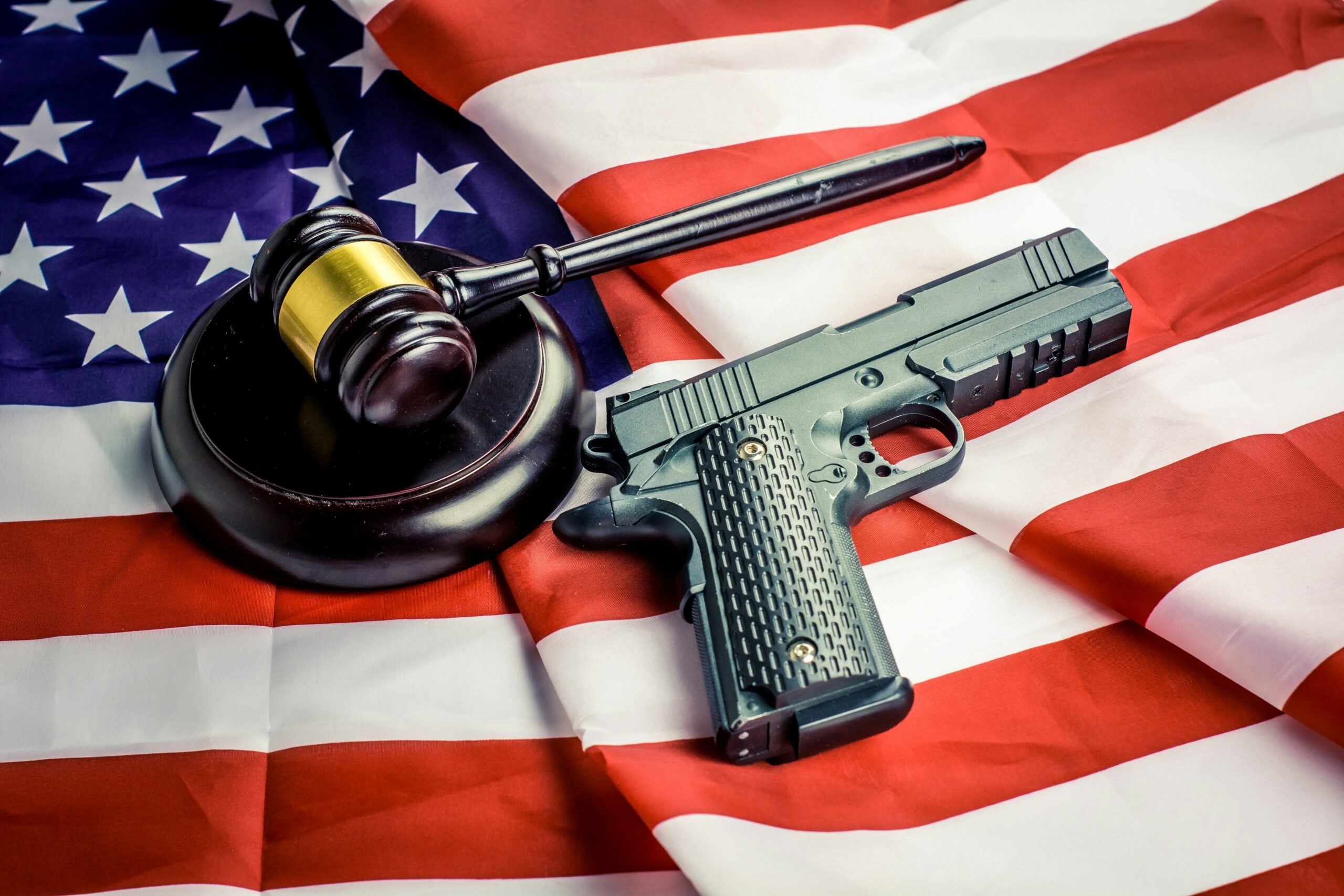
Chicago’s Morning Answer host John Anthony, filling in for Dan Proft, spoke with Todd Vandermyde, vice president of the Second Amendment Law Center and the Second Amendment Defense and Education Coalition and a former NRA lobbyist in Illinois, about a recent Seventh Circuit Court of Appeals ruling upholding the Protect Illinois Communities Act, the state law signed by Governor Pritzker in January 2023 that bans the future sale, manufacture, and acquisition of numerous semi-automatic rifles, pistols, and shotguns classified under Illinois law as assault weapons.
Vandermyde argued that the ruling conflicts with the legal framework established by the Supreme Court’s decision in New York State Rifle and Pistol Association v. Bruen, which he said eliminated interest-balancing tests in Second Amendment cases in favor of requiring gun laws to align with the nation’s historical tradition of firearm regulation. He said a more recent Supreme Court decision, United States v. Rahimi, further clarified that test through a three-part framework asking whether a law applies broadly to the political community, concerns weapons in common use, and restricts the keeping or bearing of arms. Vandermyde argued the Seventh Circuit cited Rahimi extensively while ignoring the parts of the ruling most damaging to Illinois’s position, and criticized the panel for skipping over founding-era law entirely in favor of a small number of Reconstruction-era Bowie knife statutes he said fall well short of establishing the kind of historical pattern Bruen requires.
Vandermyde discussed the consolidation of four legal challenges to the state’s gun and magazine restrictions, including a case focused specifically on firearm parts and registration requirements in which he was personally involved, noting the cases were combined for judicial efficiency after being filed in the Southern District of Illinois. He also pointed to the Supreme Court’s ruling in United States v. Hemani, a case concerning marijuana use and firearm possession, arguing that its requirements for individualized dangerousness findings and closer historical analogues could undermine several other Illinois firearms regulations, including FOID card revocation standards, mental health-based permit denials, and law enforcement objections to concealed carry applications.
Much of the conversation focused on a pending Supreme Court case, Wolford v. Cook County, which Vandermyde said could ultimately overturn the Seventh Circuit’s ruling entirely. He explained that the case, along with a companion challenge to Connecticut’s semi-automatic weapons ban, is being litigated by the law firm Cooper and Kirk on behalf of the Second Amendment Foundation and the Firearms Policy Coalition, and that a favorable ruling would likely invalidate similar bans across Illinois municipalities, much as earlier litigation forced Chicago, Highland Park, Skokie, and Evanston to abandon their own restrictions. Vandermyde said his organizations plan to file amicus briefs supporting the litigation, and he described the significant legal costs involved in Second Amendment litigation in Illinois, noting that one related case has already cost roughly three hundred thousand dollars, and said his groups are seeking donations through sadc.org to help fund additional filings.
Vandermyde also addressed proposed federal concealed carry reciprocity legislation, which he said would force Illinois to honor permits issued by other states if it becomes law, and noted a separate ongoing challenge to Illinois’s carry law brought by non-residents. He said that if the state ultimately loses its defense of the current gun ban, he expects lawmakers to attempt to implement a tiered licensing system in its place, underscoring why he believes it is important for outside legal briefs to address not just the ban itself but the broader regulatory framework surrounding it