




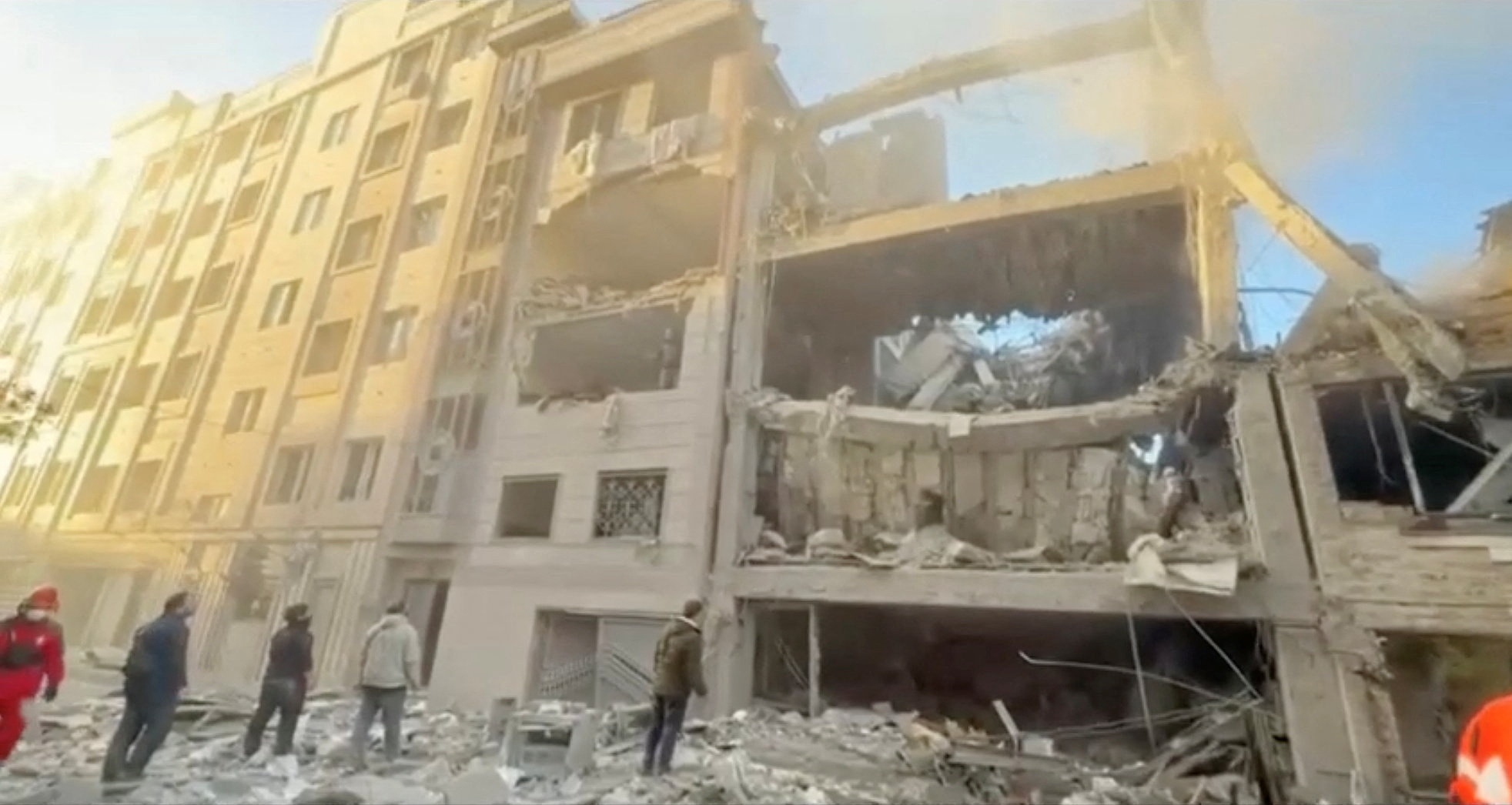
President Trump addressed the nation Monday night delivering an upbeat assessment of Operation Epic Fury’s first month, declaring Iran’s navy gone, its air force in ruins, its missile and drone production capacity dramatically curtailed, and its top leadership dead. He said negotiations are ongoing but that if they fail, the United States will simultaneously strike every Iranian electrical generating plant, while stopping short of targeting oil infrastructure to give whatever government emerges some capacity to survive and rebuild.
Doug Bandow, senior fellow at the Cato Institute, former special assistant to President Reagan, and author of Foreign Follies: America’s New Global Empire, joined Dan Proft on Chicago’s Morning Answer to offer a sharply dissenting assessment of where the campaign stands and where it is headed.
Bandow opened by acknowledging that the American military has performed with extraordinary competence and that Iran’s regime is genuinely malign. But he argued that military success is not the same as political success, and that measured against the political outcomes the administration sought, the campaign has thus far achieved none of them. Trump initially suggested the conflict could be resolved in three or four days. That timeline has passed. The president spoke of regime change in terms that implied the incoming Iranian leadership would consult Washington on its composition, a scenario Bandow said has not materialized. The figures who have emerged to replace those killed are in his assessment not moderates but a younger, more nationalistic revolutionary generation. The son of the Supreme Leader, whose father, wife, and reportedly a child were killed in the strikes, is not, Bandow said, likely to be inclined toward reconciliation. The national security adviser who was killed had been viewed as a pragmatist by regional standards, and his replacement is described as a more radical Islamist. Changing pieces on a chessboard, Bandow said, is not regime change.
He pushed back on the argument that even a surviving but severely weakened Iran represents a generational setback whose strategic benefits outweigh the costs of the conflict. He said the Gulf states, while publicly aligned with the United States, are in a more complicated position than their statements suggest. They did not want this war because they knew they would become targets, and now that they have been targeted they want the United States to finish it, but they are acutely aware of their vulnerability to Iranian retaliation against civilian infrastructure. The United Arab Emirates, which has more fighter aircraft than Great Britain, has not entered the conflict directly precisely because doing so would invite the kind of Iranian response against civilian targets that could be catastrophic. Qatar has already lost roughly a fifth of its natural gas production capacity, with restoration expected to take months if not years. Kuwait derives approximately seventy percent of its water from desalination plants, and Iran has already struck one Kuwaiti desalination facility in what Bandow described as a deliberate warning shot. If Iran were to systematically target Gulf desalination infrastructure, he said, the result would be a humanitarian crisis on a scale that the entire region, and much of the world, would blame on the United States.
Bandow said he is skeptical of the argument that Iran’s retaliatory capacity has been reduced to negligible levels by the campaign to date. Iran began with thousands of missiles and thousands of drones, and while significant quantities have been destroyed or expended, the remaining arsenal is real and is being used at a measured pace calibrated to avoid triggering the most severe American response while keeping steady pressure on the Gulf states and on Israel. Iran has been obtaining drones from Russia, he said, and both Russia and China have strong incentives to help Iran rebuild its capacity as a way of imposing costs on American power without direct confrontation. Russia in particular, he noted, has every reason to view support for Iran as a form of reciprocity for American assistance to Ukraine.
On the nuclear question, Bandow raised what he described as a painful irony in the killing of Ali Khamenei’s successor, who had been criticized within Iran for not racing toward a nuclear weapon. The strikes that eliminated that pragmatist, he said, may have removed one of the internal voices restraining the nuclear program, while the campaign as a whole has demonstrated to whoever now controls Iran that the only reliable deterrent against American military action is nuclear capability. Iran retains its nuclear materials. If it chose to enrich them, the path to a weapon could be considerably shorter than before the campaign began, and the people now making that decision are more radical than those who made it previously.
Bandow argued that a diplomatic path existed before the campaign began and was being actively explored. The Omanis and British had relayed to Washington that Iran was offering significant concessions in ongoing negotiations at the moment the strikes began, a claim Bandow said has been confirmed by regional intermediaries. He said Trump appeared to model his Iran approach on the Venezuela operation in which Maduro was removed with a relatively precise military action, but that Iran is a fundamentally different and more complex situation, with a far larger territory, deeper ideological roots, a population that has historically rallied against foreign attack, and the demonstrated capacity to impose serious costs throughout the Gulf region even from a position of military weakness.
He closed by noting what he called a striking contradiction at the heart of the current American posture: the United States is conducting sustained military strikes against Iran while simultaneously lifting sanctions on Iranian oil to prevent energy market disruption, meaning Iran is currently shipping more oil at higher prices than it was before the campaign began. That combination, Bandow said, is difficult to characterize as a coherent strategy, and he expressed concern that the path from the current situation to a stable, negotiated resolution is considerably less clear than the administration’s public optimism suggests.