




As the prospect of resumed military operations loomed over another round of stalled negotiations, Ben Cohen, senior analyst at the Foundation for Defense of Democracies, joined Dan Proft on Chicago’s Morning Answer to push back on the argument from Democratic members of Congress that the current American posture toward Iran represents no improvement over the Obama-era nuclear framework, and to lay out what a realistic path to resolution looks like if diplomacy continues to fail.
Proft opened by noting the case of an Iranian arms dealer in California who became a naturalized American citizen under the Obama administration in 2016, which Iranian dissident and regime documentation activist Masih Alinejad highlighted on Fox News as emblematic of a broader pattern of the Islamic Republic exploiting American democratic institutions and immigration processes to embed agents, money launderers, and operatives inside the United States. Alinejad also contrasted Senator John Fetterman’s support for targeted military action against the regime with the reflexive opposition of nearly every other congressional Democrat, and noted that an Iranian nurse was killed by the regime’s public security forces this week for treating wounded protesters, with the Basij photographing her body and sending the images to her husband, who subsequently took his own life.
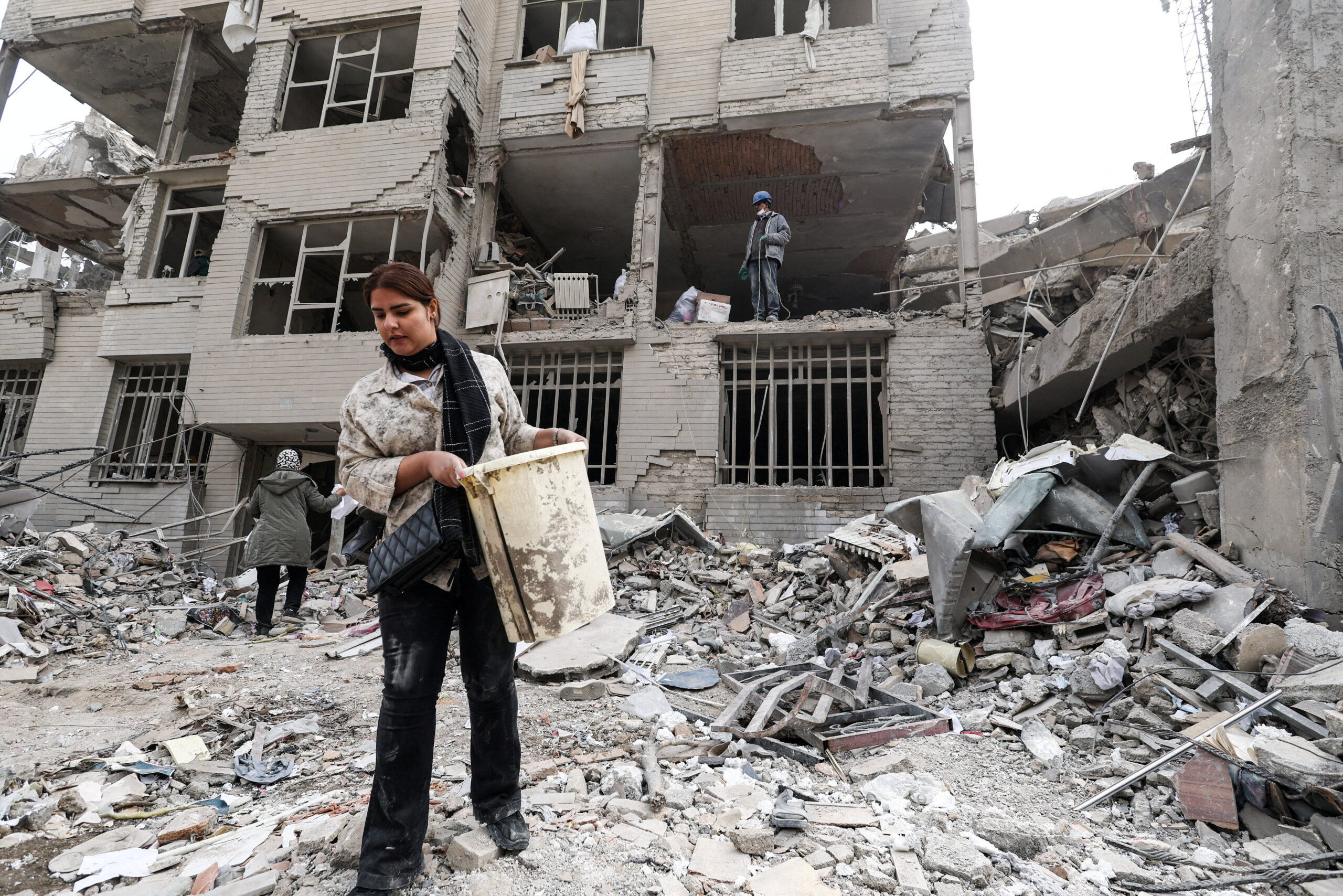
Against that backdrop, Proft played an exchange in which Representative Ro Khanna argued on Fox Business that Barack Obama was a great statesman who left America safer and that Trump’s approach to Iran represents no improvement over the JCPOA, while his interviewer read back a list of Obama-era Iran payments including fourteen wire transfers to a Swiss account linked to Hezbollah totaling one point seven billion dollars and pallets of cash flown to Tehran. Cohen said the argument that nothing has changed since Obama is simply wrong. Iran has now absorbed two major kinetic operations against its nuclear and military infrastructure, the Israeli strikes in June 2025 followed by American strikes, and then six weeks of sustained American-led military campaign this year. The Iranian regime’s military capacity, nuclear program, navy, air force, and leadership structure have been severely degraded compared to anything Obama ever confronted or contemplated confronting. The question now is not whether the situation has improved but whether continued pressure can push the regime to the point of capitulation.
On the diplomatic track, Cohen said the fundamental obstacle is institutional rather than personal. Some Iranian political figures, including the parliament speaker, appear open to tactical negotiations with the United States. But the Islamic Revolutionary Guard Corps, which controls between thirty and fifty percent of the Iranian economy in addition to the country’s military apparatus, remains virulently opposed to any meaningful agreement. He said Trump’s assessment that the enriched uranium and the strait are non-negotiable must-haves is correct but that the IRGC will not accept those terms voluntarily, and that even if an Iranian delegation shows up in Islamabad for talks, it is entirely unclear whether those representatives have the authority to commit to anything the IRGC would honor. He said the crunch point the two-week ceasefire was always likely to produce has now arrived.
On the military track, Cohen expressed reservations about the specific tactic of striking civilian infrastructure including power plants and bridges, not on humanitarian grounds primarily but on strategic ones. Any viable post-regime Iran will need functional infrastructure to govern and rebuild, and destroying roads, railways, and power generation capacity creates problems for whatever government follows the Islamic Republic. He said the real military focus should remain on the nuclear program, particularly the enriched uranium stockpile believed to be stored underground at sites including the facility known as Pickax Mountain, and on the deep underground sites where centrifuge operations and nuclear weapons research continue. He said retrieving or destroying the enriched uranium does not require a major ground invasion of Iran but rather a specific, calibrated special forces operation of the kind that has been war-gamed and for which planning almost certainly already exists.
On the question of who constitutes the viable opposition that could fill the power vacuum if the IRGC’s grip is broken, Cohen said the process of identifying and supporting a credible successor has moved slowly. Crown Prince Reza Pahlavi, son of the Shah overthrown in 1979, commands significant support among diaspora Iranians and has recently relocated from the United States to Paris, but it is genuinely unclear how much support he commands inside Iran given that it is a closed society with no free media and no open political debate. The Iranian opposition as a whole is ideologically fragmented, including monarchists, secular republicans, various left-wing and communist factions, and Kurdish and ethnic minority movements with their own agendas. Cohen said the Iranian people themselves will have to determine what kind of government they want, but that there is no obvious frontrunner capable of consolidating the opposition into a governing coalition if and when the regime falls.