




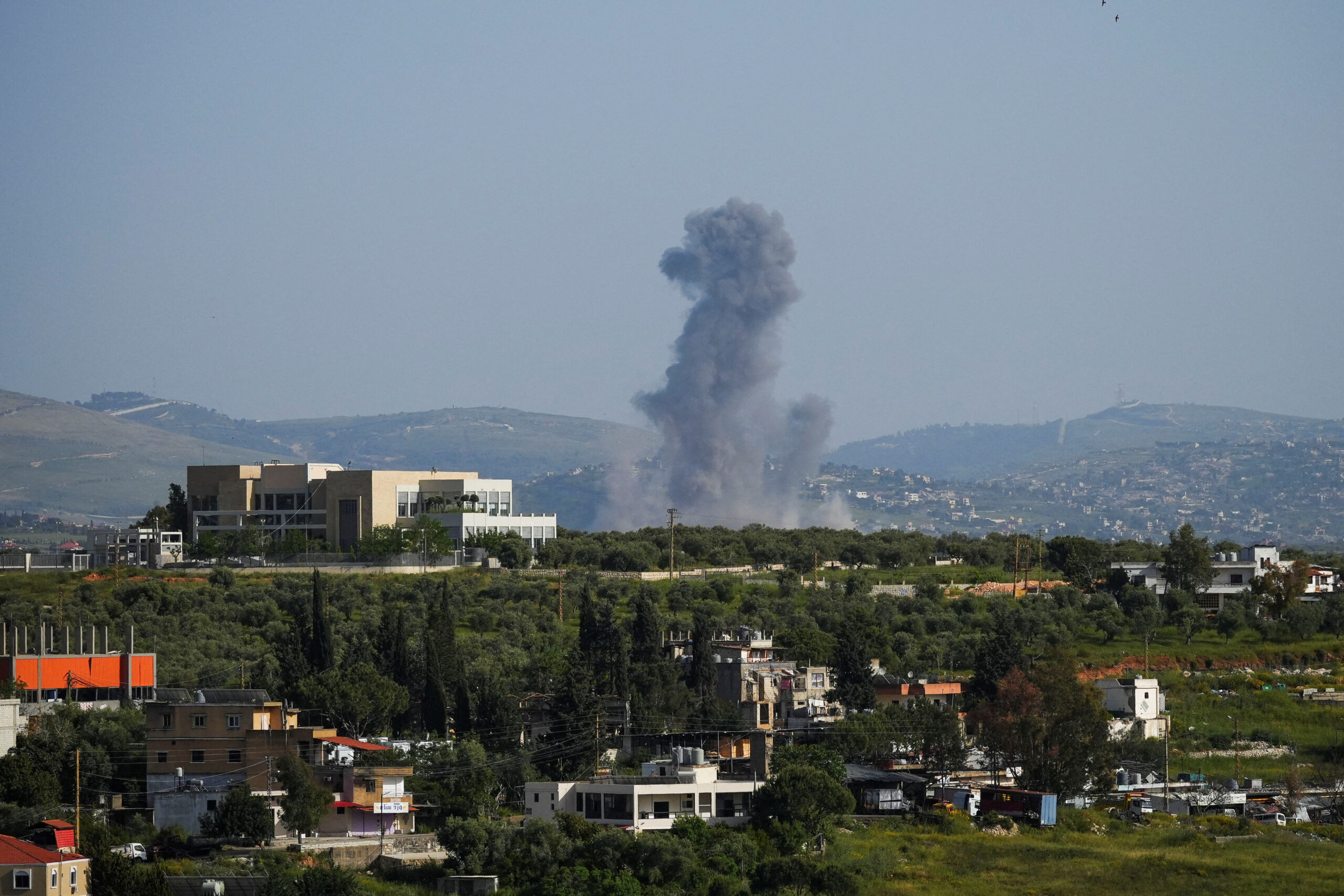
President Trump declared the Iran ceasefire on massive life support before departing for Beijing, saying he stopped reading the Iranian response document after finding it a piece of garbage, that Iran had initially agreed to turn over the enriched uranium and then walked it back when it came time to put it in writing, and that his patience is essentially exhausted. The United Arab Emirates underscored the deterioration of the situation by launching its own strikes inside Iran following Iranian missile attacks on a UAE refinery.
Kenneth Pollack, vice president for policy at the Middle East Institute and former senior fellow at the American Enterprise Institute, joined Dan Proft on Chicago’s Morning Answer to assess where things stand and what Trump should press Xi Jinping for in Beijing.
Pollack said the outcome was predictable from early in the campaign, not because Iran is strong but because the people who have ended up with the upper hand in Tehran after the decapitation of the previous leadership are the hardest of the hardliners, the same faction that opposed the 2015 Obama nuclear deal because they considered it too generous to the United States. These are people who genuinely want nuclear weapons, genuinely do not care about the Iranian economy or the welfare of the Iranian population, and genuinely believe they are winning the current confrontation. He said the leadership vacuum created by the American campaign has produced competing factions, which explains the contradictory signals the administration keeps receiving, but the consistent pattern over both the last few months and the last forty-seven years is that the hardliners prevail in these internal contests.
On the question of pathways forward, Pollack said there are essentially three. The first is making concessions to Iran, giving them what they want, which he said would be absolutely disastrous and which he is glad to hear Trump consistently and firmly rejecting. The remaining two are escalation and strategic patience. He said resuming strikes on previously identified targets, which Trump has repeatedly referenced, falls into the escalation category because the most impactful remaining targets are power plants, civilian infrastructure, and additional industrial facilities that would inflict significantly more pain on the Iranian population. He said he expects the United States will go there at some point in the not too distant future because there is a logic to the escalatory ladder and the current ceasefire is clearly failing. He cautioned that escalation will produce Iranian retaliation against Gulf State partners, which is part of why Trump has been trying to give diplomacy one more chance before resuming.
On Project Freedom and escorting commercial ships through the strait, Pollack said that operation had a significant impact and was something he had been waiting for the United States to do for weeks. The Navy successfully moved American commercial vessels through the strait, the Iranians threw everything they had at them and failed to hit them, and the demonstration effect was substantial. He said the operation was paused likely because Iran responded by escalating missile attacks against the UAE and there was concern about those attacks expanding to other Gulf partners. He said that strategic logic should change now that the UAE has itself launched strikes against Iran, and that demonstrating Iranian inability to control the strait is essential for the long-term restoration of global commerce.
He addressed Trump’s frustration with the Iraqi Kurds over the failure to pass American-supplied weapons to Iranian opposition forces, and said he has considerable sympathy for the Kurdish position. The Iraqi Kurds are actually suffering more physical damage from Iranian strikes than almost anyone else because they lack air defenses, and Iranian missiles and drones are hitting Kurdistan with regularity that receives almost no press coverage. The Kurdish calculation is entirely rational: they hate the Iranians, they want to be American allies, they have been trying to be American allies since 1975, and they keep getting abandoned. Until they are convinced the United States will maintain a presence in the region to protect them after this war ends, they are not going to fully commit to actions that will invite Iranian revenge if American forces subsequently withdraw.
On the Beijing summit, Pollack said the Chinese relationship involves far more than the Middle East and the administration is right to maintain pressure across the full range of trade, economic, and strategic issues rather than trading away progress on those fronts in exchange for Iranian pressure. But within the Middle East conversation specifically, the United States needs two things from China. First, direct Chinese pressure on Iran to accept reasonable terms, which Pollack said is the most important single ask because China is Iran’s most important trade partner and has real leverage, as demonstrated by the fact that Chinese pressure was reportedly critical to getting Iran to agree to the initial ceasefire. Second, a credible Chinese commitment to cut off trade with Iran if the regime refuses to accept a reasonable framework. He said China has always had mixed feelings about Iran because it is a source of instability and aggression that complicates China’s own economic interests in a stable Middle East, and this is a moment to press Beijing to convert that ambivalence into genuine pressure on Tehran. The implicit message, he said, is straightforward: China is an export economy dependent on Western markets, its economy is weakening, and its strategic interests are far better served by a stable Middle East and constructive relationship with the United States than by enabling a regime that is currently costing China hundreds of millions of dollars a day in disrupted energy supplies.