




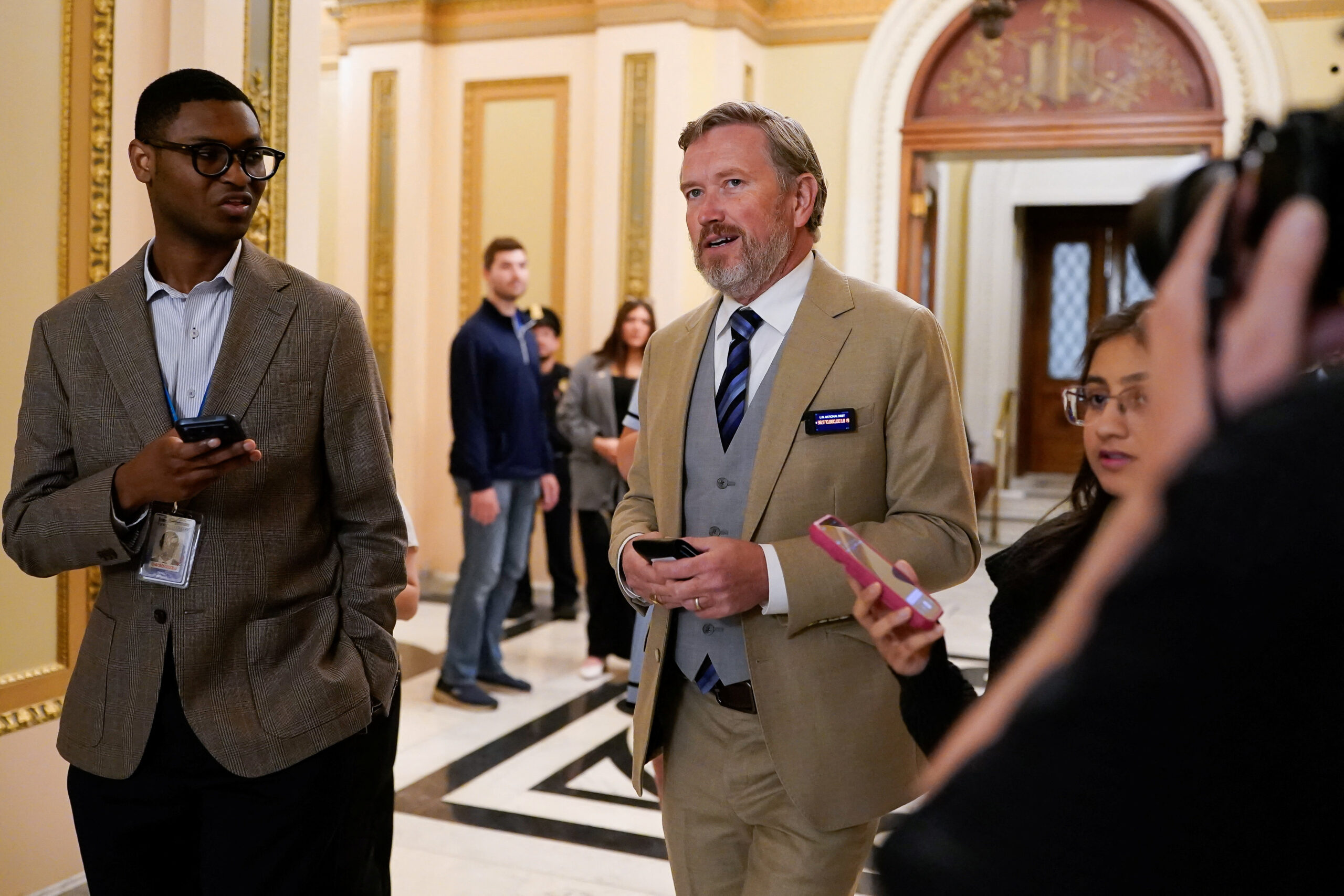
Kentucky and Georgia held primary elections Tuesday, with the Kentucky Fourth Congressional District race drawing national attention and becoming the most expensive Republican congressional primary in history as the Trump operation deployed significant resources including a campaign appearance by Defense Secretary Pete Hegseth to try to unseat Representative Thomas Massie in favor of challenger Ed Gaillard.
David Drucker, senior writer for The Dispatch and author of In Trump’s Shadow: The Battle for 2024 and the Future of the GOP, joined Dan Proft on Chicago’s Morning Answer to assess Massie’s prospects and the broader dynamics playing out in Republican primaries across the country.
Drucker said he was in the district a couple of weeks before the election talking to Republican activists and operatives on both sides, and that the race genuinely comes down to turnout in a specific way. He said the registered Republican voter file in the district contains enough votes to defeat Massie if something close to full participation is achieved. The complicating factor is that Massie’s base of what locals call liberty Republicans, the libertarian-leaning constitutional conservatives who have supported him since his first primary win in 2012, always shows up. They will be there Tuesday. The open question is whether the larger universe of more traditionally Republican Trump-aligned voters who are not part of that liberty coalition will turn out in numbers sufficient to overcome Massie’s motivated core. Higher-than-usual turnout signals across the state are encouraging for the anti-Massie effort, but whether that translates to the Fourth District specifically remains to be seen.
Proft raised what he considers a meaningful distinction between the Massie situation and the Indiana state senator primaries or the Cassidy situation in Louisiana, which is that Massie has actually picked fights his base wanted fought, particularly on COVID lockdowns, vaccine mandates, and pandemic spending. Drucker agreed the distinction is real and important. He said Massie really has not changed over his congressional career. What has changed is that most Republican voters now like the man in the White House and the House Republican leadership largely does what Trump wants, so they want Massie to fall in line with a leadership he was elected specifically to defy. The voters who once celebrated him as a fighter against the establishment now want him to stop fighting a Republican establishment they have decided is their establishment. The irony, Drucker said, is complete. He added that Massie’s rhetoric on Israel and American support for the Jewish state is also a genuine vulnerability in any Republican primary, not a manufactured one.
Looking ahead to the Texas Senate race, Drucker said if he were betting he would put his money on Ken Paxton over John Cornyn, but he drew a meaningful distinction between the two situations. Cassidy’s original sin was voting to convict Trump after the second impeachment, a specific act of perceived betrayal that Trump never forgave. Cornyn has not logged any comparable vote. His problem is stylistic rather than specific. When Cornyn was elected Texas attorney general in 1998 and senator in 2002, the kind of genteel, aerodite, governing-minded Republican he represents was exactly what primary voters across the South wanted. What those voters want now are no-holds-barred fighters who are not interested in legislating across the aisle and who bring maximum confrontational energy every day. Cornyn is simply not that person, and in the current primary environment that matters more than his voting record.
Proft noted that Cornyn’s position is additionally weakened by association with the Senate’s failure to move the Save America Act, even though Thune and the obvious filibuster holdouts are the primary targets of criticism. Drucker said the broader dynamic is that Republican voters are not interested in hearing about Senate rules, institutional norms, or the limitations of fifty-three votes. They want results, and they have been conditioned by Trump’s communication style to believe those results are achievable regardless of the institutional constraints that actually govern what the Senate can do. Democratic voters, he noted, are in the same place on their side, expecting elected officials to deliver things that simply are not mathematically possible given the numbers. The political environment on both sides has moved to a place where explaining institutional constraints is received as an excuse rather than a reality.
On the Jim Crow 2.0 rhetoric surrounding the Callus redistricting decision, Drucker said it is primarily red meat for Democratic primary audiences and will be consumed enthusiastically in that context. He said it is unlikely to determine midterm outcomes, which will hinge on how voters feel about economic conditions and cost of living. His bigger concern is the 2028 presidential cycle, where Democratic nominees running in swing states who have spent years throwing around Confederacy and Jim Crow analogies for standard redistricting decisions may find that rhetoric costs them with the independent and soft Republican voters they need in a general election.
On the Democratic 2028 field, Drucker said the picture is genuinely muddled and that the party has not resolved its central strategic debate about whether to run as a center-left party capable of winning swing states or to embrace the full progressive agenda on the theory that big bold ideas generate the turnout needed to win. He said crowded primaries with obvious frontrunners rarely produce the outcome everyone expects going in, citing 2004 when Howard Dean was overtaken by John Kerry, 2008 when Hillary Clinton lost to Barack Obama, and 2016 when nobody predicted the Republican field’s outcome. He said he expects the 2028 Democratic primary to similarly produce surprises that current polling and name recognition do not anticipate.