




A mayoral debate in Los Angeles produced what Rich Lowry, editor of National Review and author of The Case for Nationalism, called an instantly classic moment when Spencer Pratt, responding to City Council member Nithya Raman’s assertion that her evidence-based approach to homelessness produces real results, offered to walk with her under the Harbor Freeway the next morning to find people she plans to offer treatment to, and predicted she would get stabbed in the neck. The exchange encapsulates what Lowry told Dan Proft on Chicago’s Morning Answer makes the Pratt candidacy genuinely interesting and potentially significant beyond the entertainment value.
Lowry said Pratt is doing something relatively unusual in big-city politics, which is bringing street-fighter instincts to a race against opponents who have been thoroughly insulated from competition and accountability. He compared it to the Trump dynamic at the national level, where the conventional expectation that the Republican would be at a disadvantage in a bare-knuckle political fight has been completely inverted. He said what Pratt demonstrates is how far common sense can take a candidate when everyone around them has spent years building elaborate frameworks to avoid stating obvious things plainly. The substance of the homeless exchange, Pratt pointing out that the DEA attributes ninety-three percent of street homelessness to drug addiction, that Los Angeles spent four hundred million dollars to house roughly three thousand people, and that offering a bed to someone in the grip of fentanyl or supermeth is not going to produce the outcome the social services framework claims, is the kind of direct assessment that resonates precisely because nobody in the existing political class is willing to say it.
Proft had raised Raman’s response to a community meeting about the epidemic of Toyota Prius catalytic converter thefts in her district, in which she directed her anger not at the thieves but at Toyota for manufacturing a vehicle whose catalytic converter is too accessible. Lowry let that observation stand on its own merits.
He said blue cities are not incapable of improvement but require a threshold of disorder to be crossed before voters demand a change in approach. San Francisco’s epidemic of smash-and-grab car burglaries, which appeared for years to be an intractable social phenomenon, collapsed rapidly once authorities began arresting the repeat offenders responsible for the overwhelming majority of incidents. Baltimore’s murder rate is near historic lows for similar reasons. He said the consistent pattern is that a small group of chronic offenders known to both law enforcement and the community drives most of the damage, and when the political will exists to incarcerate them, the city improves measurably and quickly. The question in every blue city is not whether the solution exists but whether the political will to apply it does.
On Iran, Lowry said the situation is genuinely difficult to read from the outside because any given day could represent either the cusp of a real agreement or another round of Iranian stalling and American overoptimism. His assessment of a deal along the lines being reported is that it would represent a net benefit to American national security despite being vulnerable to the critique that it resembles the Obama JCPOA in structure. The critical difference, he said, is that layered on top of any agreement is the comprehensive destruction of Iran’s military power and industrial capacity that will take years to reconstitute regardless of what paper commitments the regime makes. He said surrendering the enriched uranium stockpile would represent a cleaner and more unambiguous victory, and acknowledged that whether the Iranians will actually do it remains an open question despite officials’ expressions of confidence. He said he would not be surprised if Trump, knowing what he knows now about how Iran chose to close the strait through asymmetric threats rather than conventional naval force, would have approached the timing differently, but said that is a common experience in military operations rather than a specific indictment of the strategic logic.
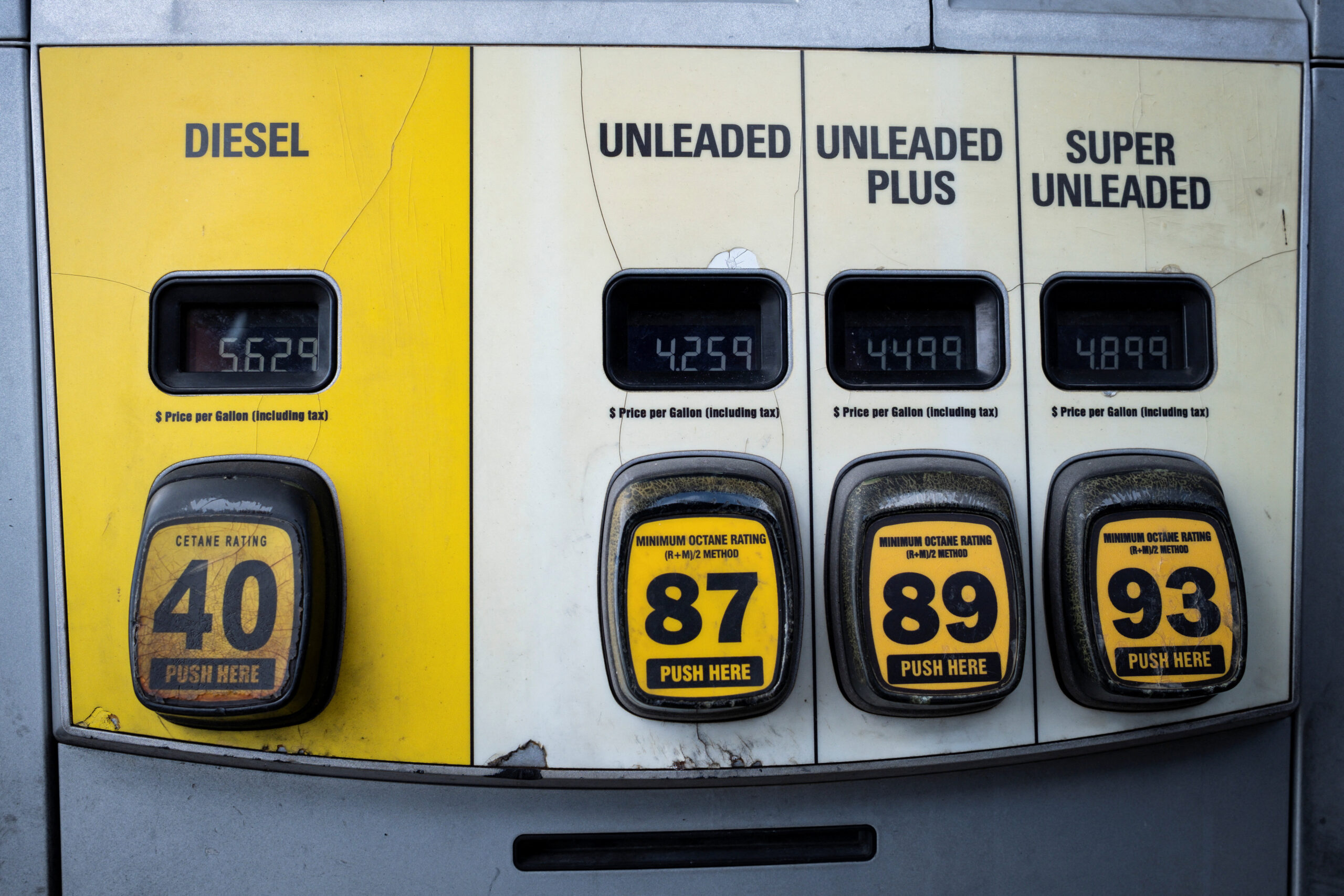
On American energy independence, he called drill baby drill the biggest domestic public policy success of the past fifteen years. He said it does not make America immune to the effects of a closed Strait of Hormuz because there is a global crude market, which is why gas prices have a four in front of them at most American pumps. But the insulation is real and measurable in other dimensions. The price of liquefied natural gas in the United States has actually declined during the strait closure because domestic pipeline capacity is overwhelmed with supply, while in Asia and Europe prices are up between eighty and over one hundred percent. West Texas intermediate crude at certain points has gone negative, meaning producers are paying to have it taken away. He contrasted that with the 1970s, when Middle Eastern oil decisions could bring an entire presidency to its knees, and said the difference is a strategic achievement that deserves more recognition than it receives.
On the Indiana Republican primary, in which Trump-endorsed challengers defeated several incumbent state senators who had declined to support congressional redistricting efforts, Lowry said the underlying grievance is understandable even if some of the affected senators had defensible local reasons for their reluctance. He said it illustrates something that talk of Trump as a lame duck has consistently missed since the 2024 election, which is that his grip on Republican voters remains without modern precedent. Ronald Reagan did not have it. George W. Bush did not have it. The ability to reach into state legislative primaries and reshape outcomes based purely on loyalty to a defined agenda is a form of political leverage no recent president has exercised, and there is no sign of it weakening.