




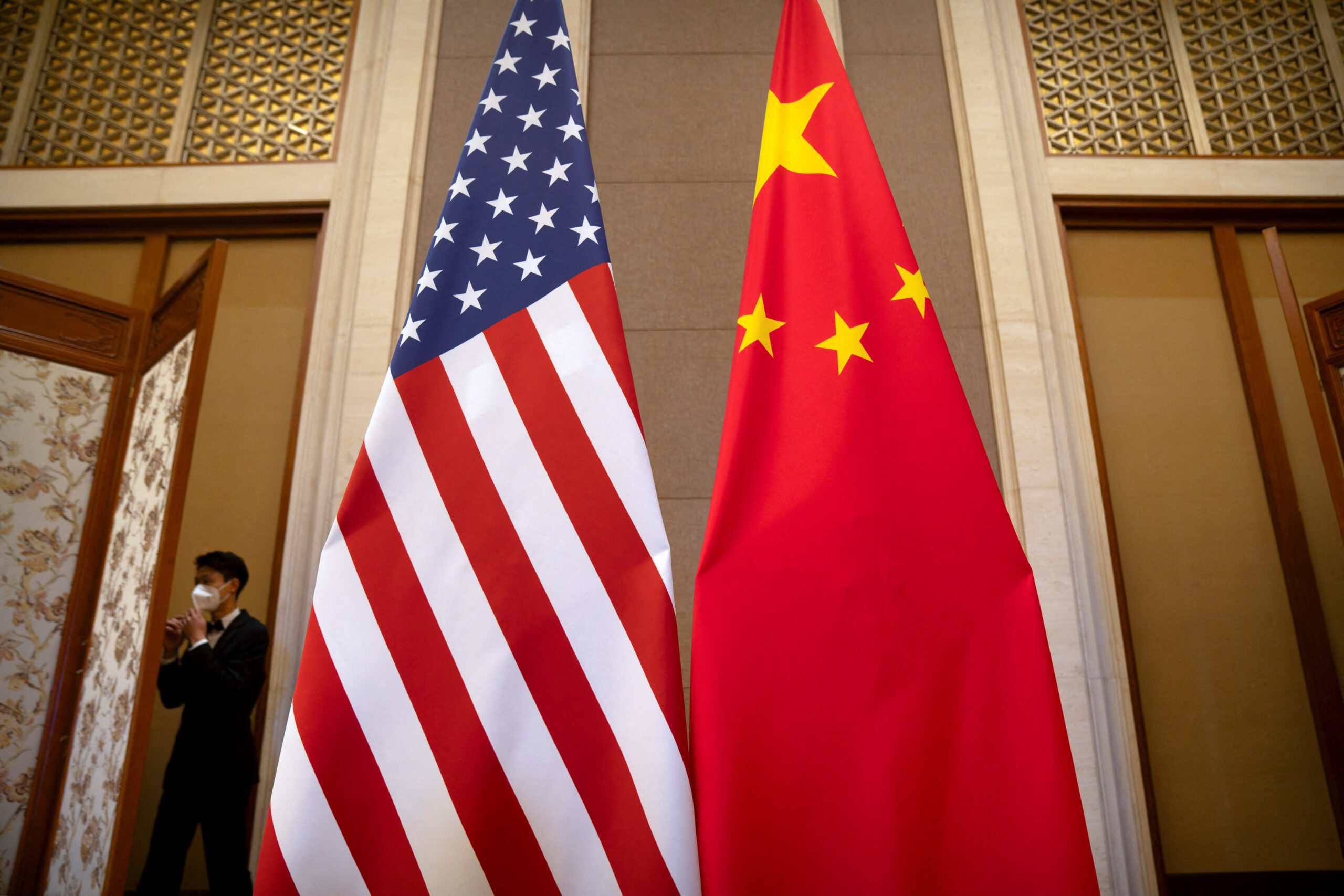
Chicago’s Morning Answer host Dan Proft talked about President Trump’s recent address on alleged Chinese Communist Party interference in the 2020 election, including declassified CIA reporting claiming Beijing pursued a coordinated strategy in 2018 to weaken his political standing and prevent his reelection. Proft cited further claims from the address alleging that raw FBI intelligence indicated Chinese-linked actors attempted to manufacture illegitimate ballots favoring Joe Biden, and that internal communications among intelligence analysts described deliberately withholding information about Chinese election activity from the president’s daily briefing. Proft noted the speech referenced an unnamed FBI official who reportedly described running what she called a shadow government to keep such intelligence from becoming public, a reference Proft connected to former FBI deputy assistant director Brian Auten’s colleague, identified in prior reporting as Nikki Flores.
Proft also played comments from House Budget Committee Chairman Jodey Arrington discussing efforts to advance the SAVE Act through the budget reconciliation process, a procedural path that would avoid the need to overcome a Senate filibuster, with Vice President JD Vance positioned to break a potential tie in his role as Senate president.
Proft welcomed Ian Williams, a former foreign correspondent for the BBC, Channel 4 News, and NBC, and author of Vampire State: The Rise and Fall of the Chinese Economy, to discuss what he argued was a more significant and underappreciated dimension of Chinese influence operations.
Williams said the question of which 2020 candidate China actually preferred remains genuinely debated within foreign policy circles, noting that some Chinese officials reportedly believed they could negotiate effectively with Trump. He argued the more consequential shift occurred around the same period, when China’s disinformation tactics evolved to more closely resemble those historically associated with Russia, focusing less on favoring a specific candidate and more on inflaming existing social and racial divisions within American society.
Williams described a Chinese influence campaign known as Dragonbridge, first identified by cybersecurity researchers, which he said involved hundreds of thousands of front accounts, state media outlets, and bot networks initially focused on spreading disinformation about the origins of COVID-19 and defending Chinese government policies in Hong Kong, Taiwan, and Xinjiang. He said the campaign later evolved to insert itself into unrelated, highly contentious domestic American debates, citing as one example disinformation spread following the 2023 Maui wildfires falsely suggesting the fires resulted from a secret American weather weapon. Williams argued this broader strategy targeting democratic institutions and social cohesion represents a more serious long-term threat than any effort to influence a single election outcome.
Proft raised a Wall Street Journal column by Holman Jenkins arguing that public skepticism toward claims of foreign election interference would carry more weight if media coverage more honestly examined the domestic intelligence community’s handling of the Hunter Biden laptop story, which Jenkins argued represents the clearest documented instance of an intelligence-related action potentially altering the outcome of the 2020 election. Williams agreed that an overly narrow focus on the mechanics of the 2020 election risks obscuring the more significant and ongoing pattern of foreign and domestic actors exploiting genuine points of political division within the United States, arguing that Russian and Chinese influence operations increasingly rely on amplifying real domestic controversies rather than manufacturing entirely fabricated narratives. He also noted growing concern about the role of artificial intelligence in making such disinformation campaigns more convincing and harder to detect than in previous years.