




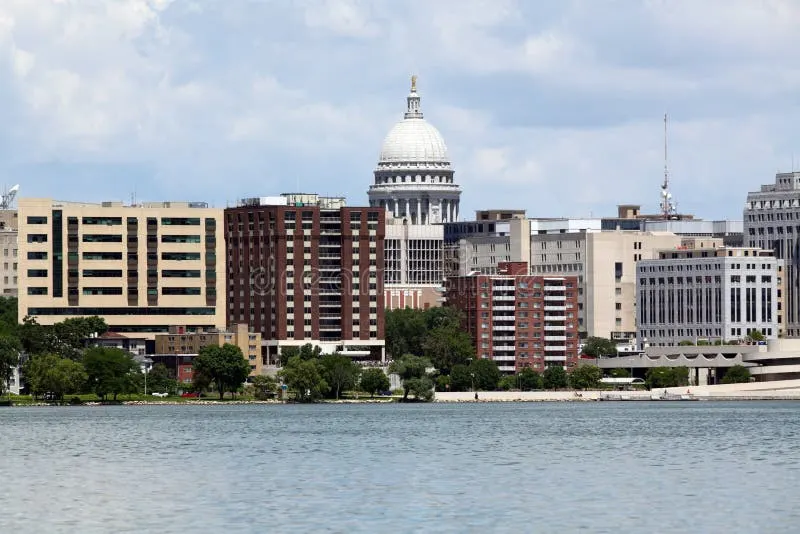
Madison police shooting involving a man who allegedly resisted arrest and injured an officer with a knife before being fatally shot. Proft played audio of Wisconsin State Representative Francesca Hong, the leading Democratic candidate for governor, characterizing the shooting as an “execution” while appearing alongside protesters at the scene, and criticized a chaotic press conference in which activists reportedly interrupted Madison’s police chief. Proft connected the episode to a separate mass shooting near Seattle’s Space Needle, arguing both incidents reflected what he characterized as institutional dysfunction tied to progressive local leadership.
Proft welcomed Scott Walker, president and CEO of Young America’s Foundation and former governor of Wisconsin, to assess the political fallout. Walker said Hong appears positioned to win the Democratic gubernatorial nomination barring a dramatic shift in the race, noting that a recent primary debate produced no equivalent to past viral missteps that have shaped Wisconsin elections. Walker characterized Hong’s rhetoric at the shooting scene as reflecting a pattern of activist-driven politics increasingly common among younger progressive candidates nationally, while noting she has since attempted to moderate her tone, including committing during the debate not to cut law enforcement funding despite her past comments critical of police funding levels.
Walker drew a comparison to Wisconsin’s 2020 unrest in Kenosha following the shooting of Jacob Blake, contrasting what he described as Governor Tony Evers’ more measured, process-focused response to the recent Madison shooting with the rhetoric that preceded destructive unrest in Kenosha five years earlier.
Discussing the broader competitive landscape in Wisconsin, Walker said Republicans currently control both chambers of the state legislature, though a more liberal state Supreme Court has forced redistricting changes that could put Republican control of the state Senate at risk depending on the outcome of the governor’s race between Congressman Tom Tiffany and Hong. Walker argued that pandemic-era remote work policies allowed many politically progressive University of Wisconsin-Madison-area residents to remain in the state rather than relocating to traditionally left-leaning cities, a demographic shift he said has measurably strengthened turnout for more liberal candidates in recent state Supreme Court elections.
Walker argued that Republican success in the fall will depend on re-energizing the coalition that supported President Trump in 2024 to also support down-ballot candidates like Tiffany, cautioning that presidential-level enthusiasm alone will not be sufficient to prevent further leftward drift in state government. He characterized Tiffany’s low-key, traditionally Midwestern political style as likely to contrast favorably against Hong’s more combative public persona among general election voters.
Walker also addressed ongoing efforts by the Trump administration to enforce free speech protections on college campuses, crediting Education Department funding pressure and the work of Assistant Attorney General for Civil Rights Harmeet Dhillon with producing meaningful, if incomplete, progress in restoring open debate to campus environments. Walker closed by encouraging listeners facing free speech restrictions on campus to contact Young America’s Foundation directly for support.