




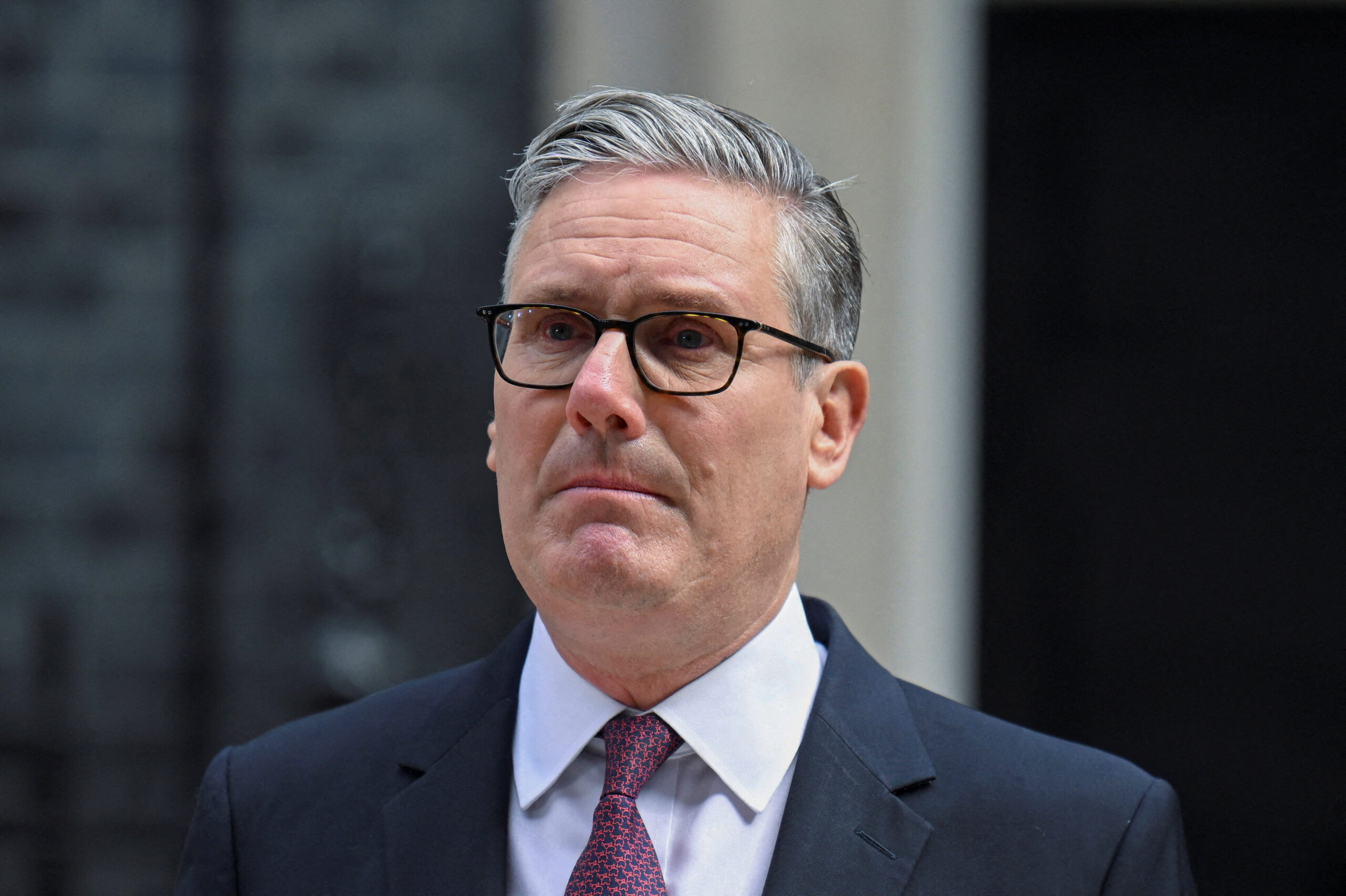
Keir Starmer announced his resignation as leader of the Labour Party, with Manchester Mayor Andy Burnham now positioned as the overwhelming favorite to become the next British prime minister sometime between mid-July and September. The announcement came days after the European Parliament voted 418 to 218 to implement sweeping new deportation policies across all EU member states, including extended detention periods, third-country return hubs, and automatic deportation stays during appeals, a clear response to mounting public pressure over immigration policy across the continent.
Ameer Kotecha, CEO of the Center for Government Reform and former senior British diplomat who served as head of the British consulate in Russia, joined Dan Proft on Chicago’s Morning Answer to assess what brought Starmer down and what comes next.
Kotecha said Starmer’s premiership was undone by a combination of two qualities that compound each other badly: ineptitude and ruthlessness. On the ineptitude, he noted Starmer was a competent lawyer and former Director of Public Prosecutions, which led many to expect at minimum a capable technocratic government. That expectation went unmet. Labour spent fourteen years out of power and Starmer himself spent four years as opposition leader, time most observers assumed would be used to prepare a detailed governing agenda. Instead, the preparation was largely absent once Labour actually took office.
On the ruthlessness, Kotecha said Starmer lost significant public support over what many in Britain view as authoritarian tendencies, particularly regarding people jailed for social media posts that, while sometimes genuinely unsavory, did not rise to the level of direct incitement to violence. He said there is a broad sentiment in Britain against living in a country where political incorrectness alone can result in imprisonment, and Starmer’s handling of those cases reinforced the ruthlessness critique.
On immigration specifically, Kotecha said Starmer fundamentally failed to control illegal immigration and abuse of Britain’s southern border. Small boat crossings from France have continued unabated despite an attempted agreement with President Macron’s government that ultimately collapsed. He said the deeper political damage came not just from the ongoing crossings but from Starmer’s instinct to police public conversation about atrocities committed by illegal immigrants rather than acknowledging the scale of public anger. When asylum seekers or migrants who arrived via unvetted small boat crossings committed serious crimes, Starmer’s tendency was to discourage speculation about perpetrators’ origins and criticize people for using what he characterized as divisive rhetoric, rather than engaging directly with legitimate public interest in whether unvetted arrivals with no background check capability were responsible. Kotecha said this dynamic, more than any single policy failure, fueled the rise of Nigel Farage and, to a lesser extent, Rupert Lowe, though he noted Lowe commands nowhere near Farage’s level of national support.
On the grooming gangs report released last week, often described in shorthand as Pakistani rape gangs though the underlying 220-page document includes perpetrators from Somalia, Iran, Syria, Turkey, and other countries, with estimates suggesting up to 250,000 girls subjected to rape, gang rape, trafficking, torture, and forced religious conversion, Kotecha called it one of the most horrific scandals in modern British history given the sheer scale of what occurred. He acknowledged some methodological criticism of the report’s specific figures, including the 250,000 estimate, but said that debate is somewhat beside the point given that virtually everyone now agrees something genuinely horrific took place. He credited both Lowe and Farage with shining a spotlight on the issue. He said the scandal is not purely an immigration story, since some perpetrators were native-born British citizens, but said much of the underlying failure stemmed from police reluctance to act on direct evidence out of fear of being perceived as racist, a dynamic that allowed the abuse to continue far longer than it should have. He said restoring basic common sense and removing the chilling effect of racism accusations from law enforcement decision-making is essential to preventing a recurrence.
On Burnham’s likely positions as incoming prime minister, Kotecha said it remains genuinely difficult to characterize him definitively as either a pragmatic or doctrinaire socialist because he has flip-flopped on multiple major issues. On Brexit, Burnham has expressed sympathy for eventual EU re-entry while more recently saying the Brexit question should not be reopened and that the will of the British people should be respected, a clearly inconsistent position. On taxation, Burnham has said he would prefer to raise taxes on wealthier citizens to fund public spending but has also said Labour’s manifesto commitment not to raise taxes needs to be honored for the sake of public trust, another contradiction. Kotecha said Starmer appears to be using the transition period to try to build a foreign policy legacy, including attendance at an important NATO summit in July, before formally handing power to Burnham, whose actual governing philosophy remains genuinely unclear heading into his expected ascension.