




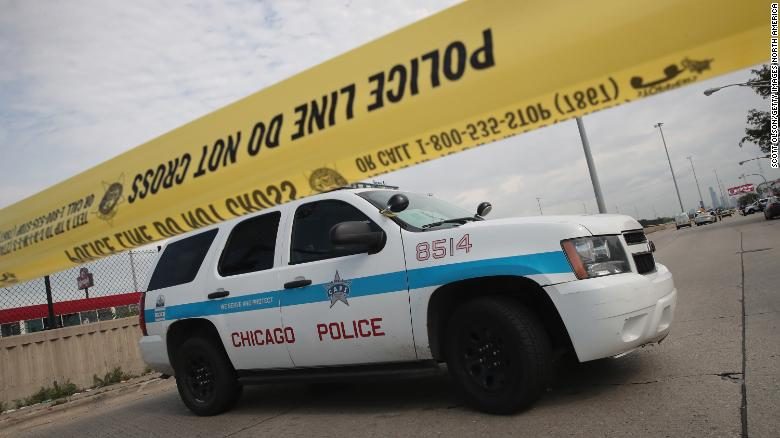
Chicago Police Superintendent Larry Snelling announced his retirement effective July 15th, departing before reaching his third anniversary in the position in what former Superintendent Eddie Johnson called an unusual and surprising move, particularly given the timing in the middle of summer when the department faces its most demanding operational period. In his farewell letter, Snelling reflected on fallen officers, the violence they worked to protect the city from, and the framed recruit t-shirt in his office that reminded him of the twenty-two-year-old who walked into the police academy wanting to protect people who needed help. Johnson, who served as superintendent under Mayor Rahm Emanuel, joined Dan Proft on Chicago’s Morning Answer to provide context on why Snelling likely made this decision and what it says about the state of policing in Chicago.
Johnson said when you read between the lines, the picture is clear. Superintendents do not typically leave before completing three years under a mayor who appointed them, and the public disagreements between Snelling and Mayor Brandon Johnson over ShotSpotter, teen curfews, and how to handle takeover events were visible manifestations of a deeper dysfunction. He said Snelling is fundamentally a cop who wants to protect the city, and when a superintendent feels his boss does not have his back and is not letting him do the job the way it needs to be done, you eventually reach a point where staying no longer makes sense. He contrasted the situation with his own experience under Emanuel, whom he described as a mayor who never interfered with running the police department, had his back on everything, and was in lockstep with him on public safety priorities.
On the slow erosion of police resources, Johnson said what is happening amounts to defunding the police without publicly saying so. When he left the department, there were roughly 13,500 sworn officers. That number has declined to approximately 11,000, a loss of nearly twenty percent of the force, and the ranks are not being replenished. He cited the creation of a new department to combat gun violence, announced last week, which most people immediately recognized as duplicating the core mission of the Chicago Police Department itself, and the continued reliance on violence interrupters as substitutes for police presence on mass transit and elsewhere. He said a city of 170 square miles and 2.7 million people cannot be kept safe without adequate personnel, and the inability to staff CTA coverage around the clock is a direct consequence of the manpower shortage that the administration is allowing to worsen.
Johnson said the Chicago Police Department now operates under more layers of oversight than any department in the nation, which he called nutty. He said when officers are wrong, acknowledge it and fix it, but the apparatus of oversight has become so burdensome that it compounds the staffing problem by making the job less attractive to potential recruits and more frustrating for existing officers who feel they cannot do their jobs without second-guessing from multiple directions simultaneously.
On the ideological dimension, Johnson said Brandon Johnson’s public characterization of law enforcement as a sickness was perhaps the most disheartening statement he has heard in the last couple of years, and said if he had been superintendent and heard his boss say that, he would probably be doing exactly what Snelling is doing. He said the administration’s refusal to address teen takeover events with appropriate consequences, preferring instead to avoid demonizing young people through pejorative language, fundamentally misunderstands how deterrence works. He said offenders do not worry about the length of consequences nearly as much as they worry about the certainty of consequences, and when there is no certainty that disruptive, destructive, or violent behavior will produce any consequence at all, the behavior continues and escalates.
On working with federal law enforcement, Johnson said when he was superintendent under similar sanctuary city policies, Emanuel trusted him enough to manage the relationship with federal agencies on a day-to-day basis without creating public confrontations. He said he spoke with federal counterparts weekly if not daily depending on circumstances, and the understanding was always that if federal officers got into trouble, Chicago police would help them the same way they would help anyone else, because they are law enforcement and they have the same rights as any other person in distress. He said the standdown orders and the sharper antagonism toward federal agencies under the current administration made Snelling’s job far more stressful than it needed to be.
On what he hopes to see from the upcoming mayoral race, Johnson said he would like to see a candidate from inside the city who understands public safety, hires a superintendent because that person is an expert in the field, and then listens to that superintendent rather than dictating how policing should be conducted. He said civilians who have never put handcuffs on anyone or worked a patrol shift are not in a position to tell experienced law enforcement professionals how to do a job they have never done themselves. He said there is enough energy within the city and certainly within the police department to change course, but he does not believe city hall currently sees it that way, and until leadership changes, the trajectory will not.