




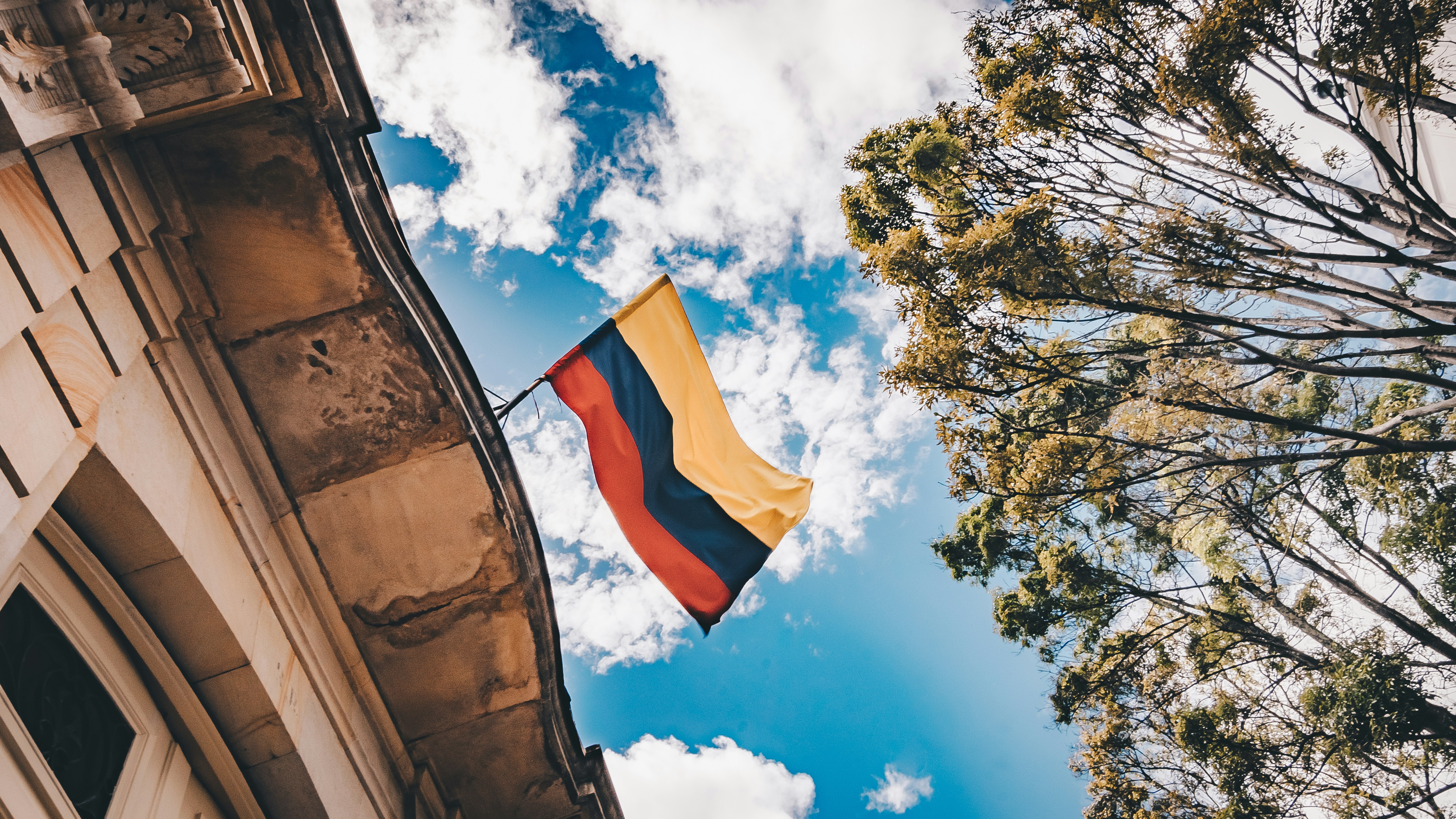
Colombia narrowly elected lawyer Abelardo de la Espriella on Sunday, replacing outgoing socialist president Gustavo Petro, who at one point all but suggested President Trump should be assassinated. The result adds Colombia to a growing list of Latin American nations that have moved right in recent elections, including Chile, Bolivia, Peru, Ecuador, Honduras, and Costa Rica.
Juan David Rojas, who covers Latin America and global Hispanidad for UnHerd, joined Dan Proft on Chicago’s Morning Answer to assess what drove the Colombian result and whether the broader regional pattern represents a durable realignment or another turn of the hemisphere’s familiar political pendulum.
Rojas said the comparison between de la Espriella and Argentina’s Javier Milei, which his own headline invoked, requires some qualification. Both men were historically free market oriented and both were classical libertarians who held progressive positions on social issues like abortion and euthanasia before pivoting toward social conservatism when they entered electoral politics, a pragmatic adjustment reflecting where the actual right-of-center electorate is rather than where elite libertarian theory lives. But the underlying dynamics driving the Colombian result are more specific to Petro’s failures than to any sweeping ideological conversion.
Rojas said Petro’s most damaging failure was on public safety. Colombia, the birthplace of Pablo Escobar, is not a country where progressive criminal justice reform, meaning reduced sentences for various categories of crime, has any natural constituency. Petro imported those ideas from American progressive politics and they landed badly. He simultaneously attempted to negotiate with multiple armed groups, guerrillas and paramilitaries alike, without the credibility or the iron fist necessary to extract meaningful concessions. Rojas said voters he spoke with were not necessarily opposed to negotiating peace deals with armed groups but felt Petro was simply not tough enough to make those negotiations produce results.
On energy, Rojas said Petro’s approach amounted to what he called climate fundamentalism. He staffed the board of Ecopetrol, the state-owned oil company and the largest company in Colombia, with academic climate activists who knew nothing about oil extraction and a crony who turned out to be corrupt. The result was predictable: Ecopetrol’s revenues collapsed by roughly half during his term. In a country where petroleum-related revenues account for approximately half of all government income, destroying the national oil company produced stagflation, with inflation running around ten percent alongside low growth, conditions that made ordinary Colombians miserable. De la Espriella ran on an all-of-the-above energy strategy including fracking, which Petro had declared a crime against humanity, a characterization Rojas dismissed as environmentalist propaganda unsupported by data.
On the broader regional pattern, Rojas was notably more cautious than the headline trend might suggest. He said Latin American politics typically operates in waves, with left-wing and right-wing candidates alternating based largely on how badly the incumbent screws up rather than on deep ideological commitment from the electorate. Left-wing leaders lose on crime, energy, and cultural overreach. Right-wing leaders lose when they come in and try to cut everything, alienating populations that depend on social spending. He said Milei’s situation in Argentina was genuinely warranted given debt-to-GDP ratios around 150 percent, now reduced to roughly 70 to 80 percent, but that applying the same austerity playbook in countries like Chile or Colombia that are not comparably indebted risks killing growth and triggering the next leftward swing.
On Latin American attitudes toward Trump and American influence, Rojas said the picture is split. Right-wing leaders across the hemisphere are enthusiastically aligned with Trump and willing to cooperate on everything from anti-cartel operations to welcoming American investment. De la Espriella has said he would welcome Trump bombing cartel targets inside Colombia. Ecuador’s president has expressed similar sentiments. However, broader public opinion toward Trump has soured considerably since he returned to office, with concerns about legally dubious boat strikes against alleged narco-terrorists in the Caribbean and Pacific and a general wariness about American heavy-handedness. Rojas said it is telling that even as general populations express disapproval of Trump in polling, they are still electing Trump-aligned candidates because the left’s failures in government are perceived as worse.
On China, Rojas said the situation is more complicated than the rhetoric suggests. Every right-wing Latin American leader talks tough about reducing Chinese influence, but China has become the number one trading partner for most of these countries, provides massive infrastructure investment including building Bogota’s metro system, and absorbs the bulk of their exports. Milei campaigned on not trading with communists and then quietly continued doing business with Beijing once in office because the economic dependency is too deep to sever by declaration. Russia is easier to distance from because it simply lacks the capital to invest at the scale China does.
On the question of whether youth support for right-wing candidates is durable or superficial, Rojas noted that in Argentina it was young people who elected Milei while the elderly voted for the Peronist opposition, a pattern now emerging in Brazil as well. In Colombia, the generational alignment ran the opposite direction. He acknowledged the concern that young people attracted to libertarian ideas as a counterculture movement may not have the foundational commitment to sustain those positions when the practical costs of austerity and personal responsibility become concrete, a dynamic he agreed applies as much to American youth as to their Latin American counterparts.