




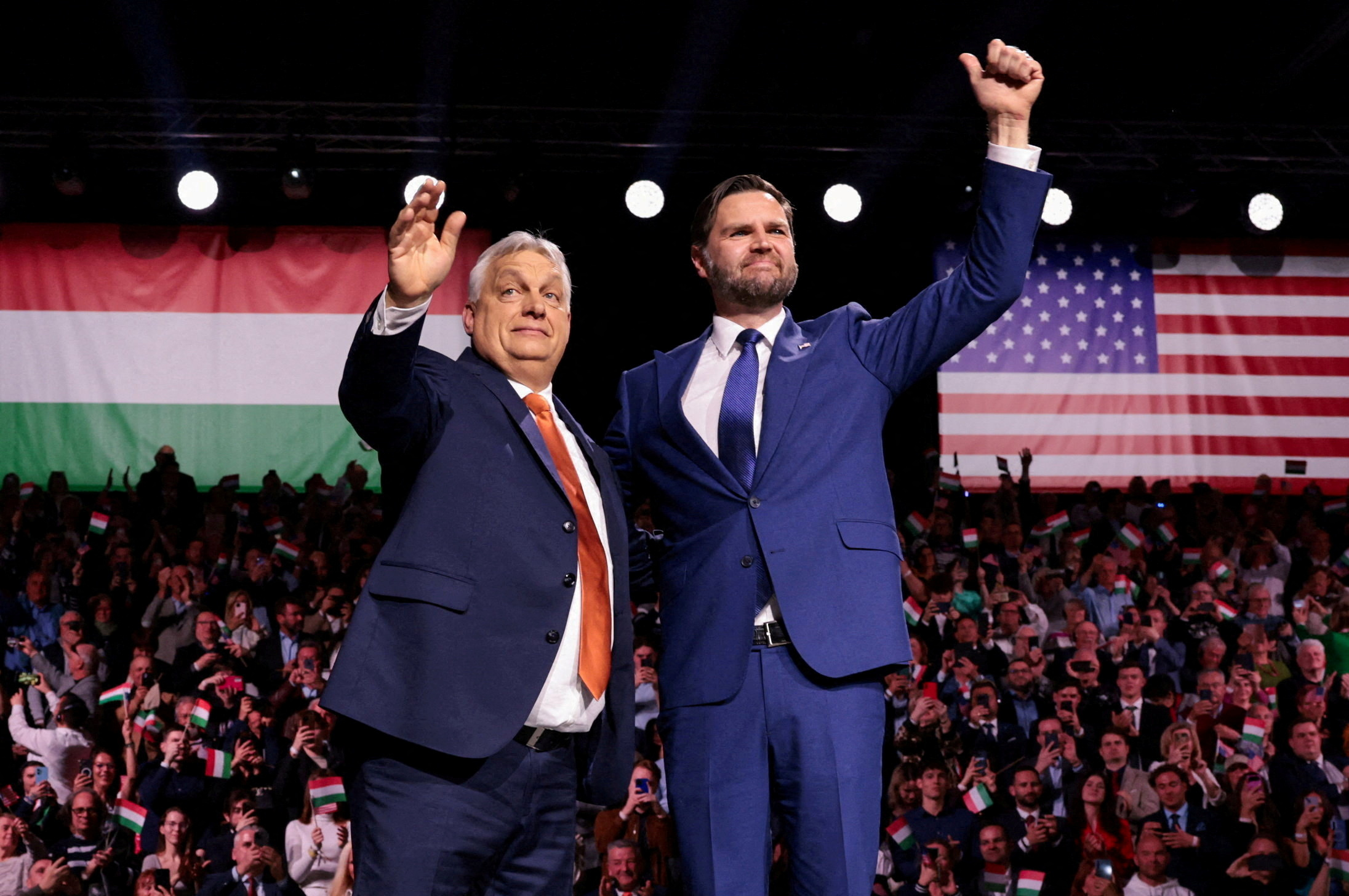
A wide-ranging discussion on Chicago’s Morning Answer turned to the intersection of theology, foreign policy, and political leadership as Richard M. Reinsch weighed in on recent comments from Vice President JD Vance regarding the role of religious leaders in public debates.
The conversation was prompted by remarks from Vance at a Turning Point USA event, where he addressed comments from Pope Leo XIV suggesting that “God is never on the side of those who wield the sword.” Vance argued that such statements overlook the long-standing Christian tradition of just war theory, which has historically attempted to define the moral conditions under which the use of force can be justified. He cited examples such as World War II, suggesting that military action to defeat regimes like Nazi Germany could be considered morally justified.
Reinsch, a scholar of political and legal thought, echoed concerns about the theological precision of such statements, noting that just war theory has deep roots in the writings of figures like Thomas Aquinas and Augustine of Hippo. He explained that the tradition does not dismiss war outright but instead seeks to impose moral limits, emphasizing questions of legitimate authority, proportionality, and the protection of civilians. According to Reinsch, these considerations are typically entrusted to political leaders responsible for the common good, rather than religious authorities issuing broad generalizations.
At the same time, Reinsch acknowledged that religious leaders have long contributed to public discourse on moral issues, including war, immigration, and human rights. However, he suggested that their influence is most effective when grounded in clear doctrinal teaching rather than broad or ambiguous statements that can be interpreted in multiple ways. The discussion reflected a broader tension over how clergy engage with modern political debates, particularly when their remarks intersect with ongoing conflicts such as tensions involving Iran.
The interview also explored disagreements between some Catholic leaders and political conservatives on immigration policy. Reinsch argued that Catholic teaching emphasizes both compassion and prudence, allowing nations to consider their capacity to absorb migrants rather than endorsing entirely open borders. He suggested that disagreements arise when policy positions are presented as doctrinal imperatives rather than prudential judgments.
Beyond theology, the conversation shifted to international politics, particularly the recent electoral defeat of Hungarian Prime Minister Viktor Orbán. Reinsch offered a nuanced assessment of Orbán’s legacy, noting his electoral success and policy influence while also pointing to concerns about corruption, economic stagnation, and demographic challenges. He emphasized that Orbán’s successor, Péter Magyar, is not necessarily a political opposite but represents a shift driven in part by voter dissatisfaction with governance issues.
The discussion highlighted divisions within conservative circles over Orbán’s leadership, as well as broader questions about how the United States engages with foreign allies. While some American conservatives have viewed Hungary as a model for certain policy approaches, Reinsch suggested that the country’s political transition underscores the limits of that perspective and the need for continued engagement with new leadership.
Throughout the interview, the exchange underscored the complex interplay between religious doctrine, political authority, and public policy. As debates continue over the moral dimensions of war, immigration, and governance, voices from both the political and religious spheres appear likely to remain central to shaping the conversation.