




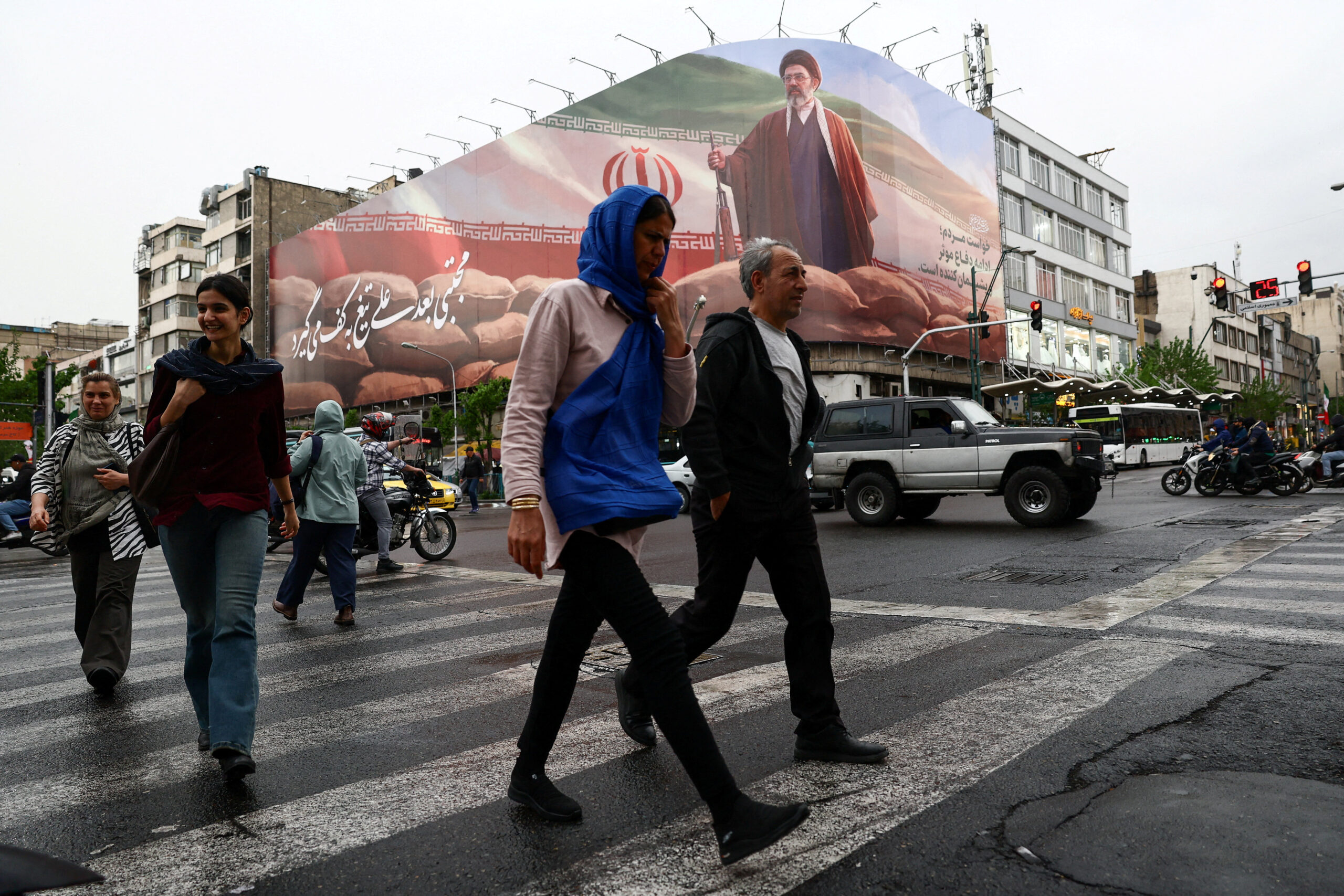
As Vice President Vance and the American negotiating team arrived in Islamabad for another round of talks Monday, President Trump posted on Truth Social that Iran had violated the ceasefire agreement by firing on a British-flagged freighter in the Strait of Hormuz over the weekend, declared no more Mr. Nice Guy, and promised that every power plant and every bridge in Iran would be struck if no deal is reached before the ceasefire deadline expires.
Steven Bucci, thirty-year Army Special Forces veteran and former top Pentagon official, now visiting fellow at the Heritage Foundation’s Allison Center for Foreign Policy Studies, joined Dan Proft on Chicago’s Morning Answer to assess the state of negotiations and push back on commentary from former Obama and Biden officials suggesting the conflict has somehow strengthened Iran’s position.
Proft opened by playing two clips from Bill Maher’s program, in which former National Security Advisor Jake Sullivan argued that Iran has now demonstrated it can close the Strait of Hormuz and will use that as ongoing leverage, and former Chicago Mayor and Ambassador Rahm Emanuel called for ending American military financial assistance to Israel. Foundation for Defense of Democracies president Mark Dubowitz responded to Sullivan’s assessment by arguing the precise opposite, contending that under the Obama nuclear deal Iran would have emerged after 2030 with nuclear-armed intercontinental ballistic missiles, ten thousand ballistic missiles, a Chinese and Russian-built military, hundreds of thousands of attack drones, and hundreds of billions in cash to harden its economy, creating a scenario in which reopening the strait by force would have been impossible. What Trump is doing, Dubowitz argued, is undoing exactly that outcome before it could materialize.
Bucci agreed that the administration’s approach of putting down hard markers and making the cost of non-compliance explicit is the only method that works with the current Iranian leadership. He said the Iranians would love to negotiate the way Sullivan, Obama, and Biden did, meaning extract concessions without giving meaningful commitments in return, and that Trump is not going to operate that way. He described the regime’s current internal state as genuine disarray, with the IRGC appearing to be the effective decision-making authority rather than any formal political leadership, and said the IRGC’s hardliners have concluded they have nothing to lose, which is why they continue firing at ships and testing American resolve even as their conventional military capacity has been largely destroyed.
On the question of what concerns a careful military advisor would raise about the threatened infrastructure strikes, Bucci said from a purely military standpoint there is not much to worry about. Iranian forces cannot stop American strikes on power plants and bridges, and he said any small vessel in the strait that cannot be positively identified as civilian should be treated as a threat and sunk. The more significant risks, in his assessment, come from the domestic and international political reaction to civilian infrastructure targeting, including pearl-clutching from European allies, the Pope, and the American left, all of whom will use any civilian casualties to argue for a return to the kind of diplomatic accommodation that characterized the pre-Trump approach. He said Trump is not going to go back to that posture and will finish this one way or another, but acknowledged that midterm political pressures represent a genuine constraint on how long the current level of effort can be sustained.
Proft offered his own view that the two tangible deliverables worth declaring victory over are a freely flowing Strait of Hormuz without Iranian interference and physical possession of the enriched uranium from last June’s nuclear facility strikes. He argued that any agreed time limit on Iran’s nuclear program, whether ten or twenty years, is not worth much on paper given the regime’s history of non-compliance, and that the real enforcement mechanism will be ongoing regardless of what any document says. Bucci said he is still pulling for organic regime change driven by the Iranian people rather than imposed from outside, and that the most effective way to support that outcome is to continue targeting the IRGC aggressively, since the Revolutionary Guard is simultaneously the entity in effective control of the country and the primary obstacle to any popular uprising gaining traction.
The conversation closed on Senator Chris Murphy of Connecticut, who while attending a pro-socialist event in Barcelona called the current moment the greatest threat to American democracy since the Civil War and said the United States is in the middle of a totalitarian takeover. Bucci said Murphy’s comments while American servicemembers are in harm’s way are reprehensible, and that while such statements from a single senator are unlikely to affect military morale at the institutional level, the broader political damage from senior elected officials traveling to foreign soil to characterize their own government as a totalitarian regime in the middle of an active military campaign is another matter. He called it sedition, acknowledged he is not a lawyer and cannot make a precise legal determination, and said the Senate should censure him for it. He added that the accusation of oligarchic capture and democratic subversion is, in his view, a projection of precisely what the Democratic Party’s various state-level election law manipulations in Virginia, California, and elsewhere actually represent.