




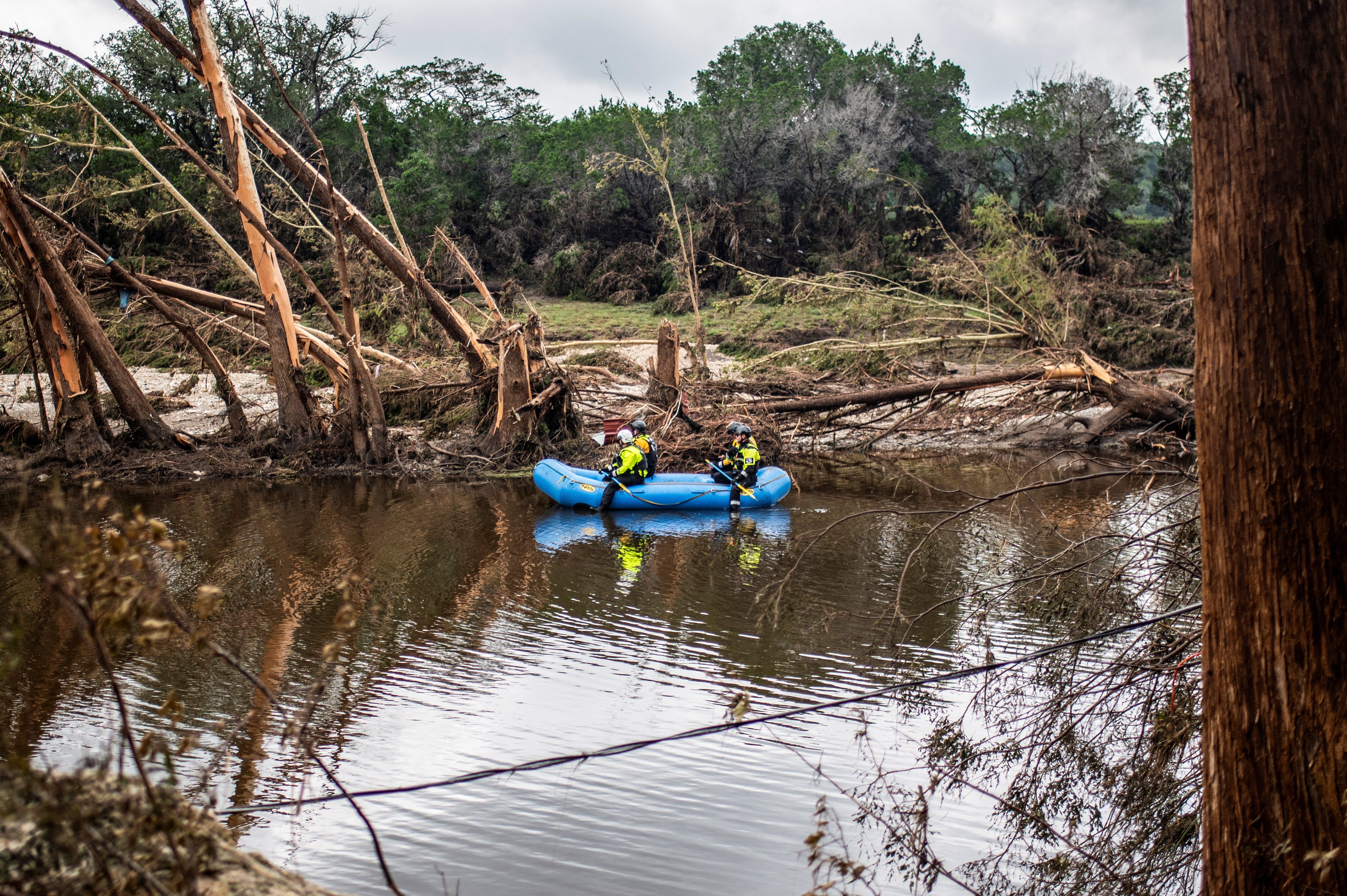
As rescue and recovery efforts continue in flood-ravaged central Texas, the search for answers about what went wrong is already underway. On Chicago’s Morning Answer, host Dan Proft spoke with The Spectator’s U.S. senior editor, Neal Pollack, who lives in central Texas and offered an on-the-ground perspective about the disaster—and the politicized reactions that followed.
The death toll from the Kerr County flooding stands at 104, but thanks to heroic efforts from first responders like Coast Guard rescue swimmer Scott Ruskin, the number could have been even higher. Ruskin, on his first mission, is credited with helping evacuate more than 160 people, many of them children trapped at a summer camp.
Despite these life-saving actions, political commentary quickly followed. Proft and Pollack discussed how some national media outlets—particularly ABC’s George Stephanopoulos—seemed eager to frame the tragedy as a failure of the Trump administration, citing prior budget cuts to the National Weather Service. Pollack pushed back on that narrative, saying it simply wasn’t true. He noted that local meteorologists had issued warnings as early as the day before, and that the National Weather Service sent out multiple alerts ahead of the worst flooding.
The real issue, Pollack argued, was a lack of preparedness at the local and state level. Kerr County, a largely rural and Republican-leaning area, had not updated its flood infrastructure or emergency communication systems. State lawmakers had recently failed to pass a bill that would have created a more advanced natural disaster warning system. Pollack pointed out that even local officials tried to shift blame toward the federal government rather than addressing gaps in their own response planning.
He also dismissed the claim that climate change was the primary driver of the flooding. Flash flooding has long been a fact of life in central Texas, which lies in a region known as “Flood Alley.” Historical records show similarly devastating floods in the same area decades ago—well before modern climate policy debates began.
Pollack and Proft agreed that political posturing in the wake of natural disasters often distracts from more important conversations about public safety and infrastructure. Many Texas residents receive frequent flash flood warnings and can become desensitized to the alerts, which may have contributed to the high casualty rate. The timing of the event—occurring in the middle of the night—also played a role in preventing timely evacuations.
Ultimately, Pollack urged listeners to focus on solutions rather than scoring political points. He emphasized that disasters don’t discriminate based on party affiliation and that bipartisan cooperation is needed to ensure that warning systems, local infrastructure, and emergency preparedness improve across the country.
As the state recovers from this latest crisis, the challenge remains: how to move beyond the blame game and toward lasting improvements that protect all communities—regardless of politics.