




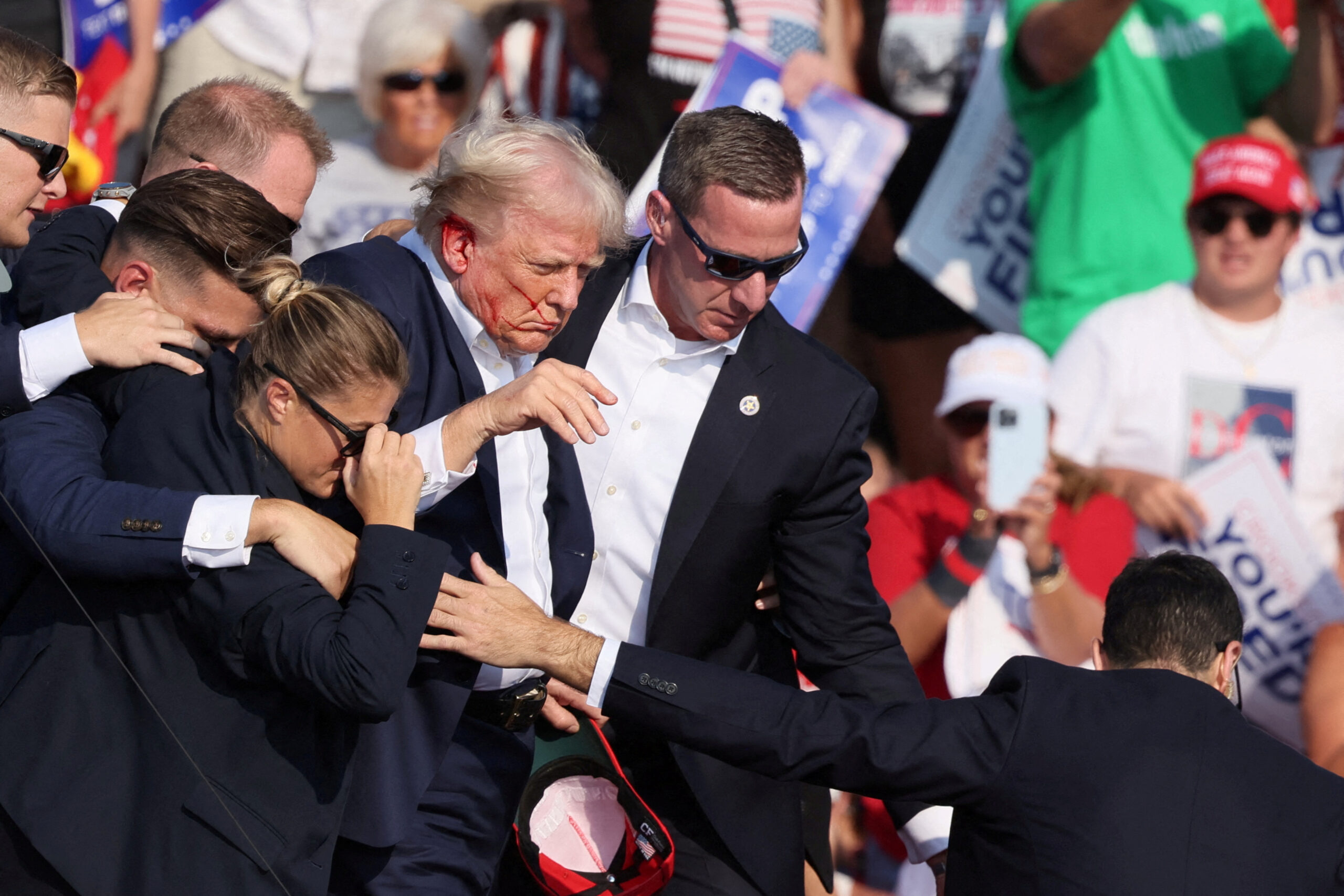
One year after the attempted assassination of former President Donald Trump at a campaign rally in Butler, Pennsylvania, the fallout continues over the Secret Service’s handling of the event. In an interview on Chicago’s Morning Answer, Dan Proft spoke with former Secret Service agent Mike Olson, who offered a frank assessment of the agency’s internal breakdowns and the tepid disciplinary actions that followed.
Olson, now co-founder of 360 Security Services, criticized the agency’s lack of meaningful accountability, pointing to reports that only a handful of junior-level personnel were suspended—none for more than 42 days. Despite the death of Trump supporter Corey Comperatore and a narrowly averted national tragedy, no senior officials were dismissed.
“What we’re seeing is a protection of the bureaucracy,” Olson said, suggesting that the agency has fallen into a culture where poor decisions are excused by the absence of specific written policies. “That’s not how a zero-fail mission should operate,” he added.
Proft echoed these concerns, referencing testimony from former Acting Director Ronald Rowe, who last year told Congress that he couldn’t confirm whether anyone was assigned to guard the rooftop position where the shooter eventually opened fire. Despite whistleblowers indicating a failure in rooftop security and reports that local law enforcement had offered drone surveillance—which the Secret Service declined—Rowe emphasized a “no rush to judgment” approach and maintained that the incident was a collective failure, not an individual one.
Olson rejected that line of reasoning, arguing that a lack of documented policy doesn’t absolve individuals from poor judgment. “At some point, the person making the call has to be held accountable,” he said. “You can’t blame the absence of a memo for a lapse in common sense.”
Beyond the Butler incident, Olson said the culture of the agency has been eroded over time by shifting priorities. He cited mandatory diversity and inclusion meetings from more than a decade ago that, in his view, distracted from the agency’s core protective mission. “We were pulled away from mission-critical tasks,” he said. “That takes a toll.”
He was also sharply critical of the explanation that classified threat intelligence wasn’t properly relayed to state and local partners. “That’s ridiculous,” Olson said. “You don’t have to share the exact intelligence. You can communicate the gist of it and raise the threat level accordingly.”
Proft noted that while the agency claims reforms are underway, there remains a troubling lack of clarity around the most basic questions—such as why no one was stationed in the elevated position with a direct line of sight to the stage. “If there’s an answer, we still haven’t heard it,” he said.
On the question of whether new leadership under Director Sean Curran represents a turning point, Olson was cautiously optimistic. Curran, who previously led Trump’s protective detail, was described as someone with firsthand knowledge of what went wrong. “I think he’s in a unique position to lead meaningful reform,” Olson said. “And from what I’m hearing inside the agency, there’s some reason for hope.”
Still, Olson warned that reform will only come with real accountability, better training, and a renewed focus on mission readiness. “This can’t be about protecting careers,” he said. “It has to be about protecting lives.”