




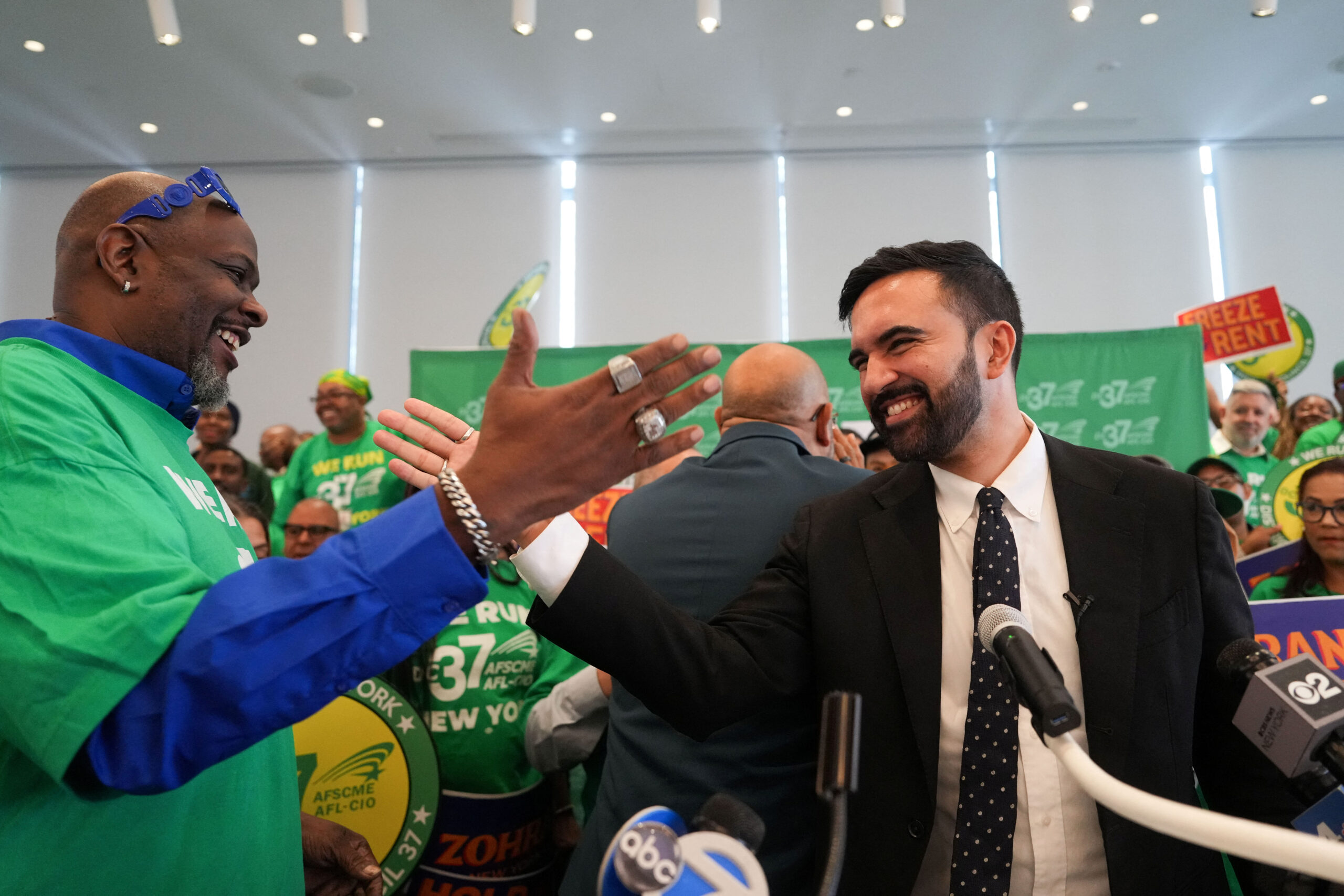
Political analyst Michael Baharaeen discussed the growing influence of left-wing candidates in urban politics—focusing on New York City’s surprise mayoral frontrunner Zoran Mamdani—and what it means for the future of the Democratic Party.
Mamdani, a self-described democratic socialist and state assemblyman, has become the leading candidate in New York City’s mayoral race, catching many establishment Democrats off guard. Despite a history of controversial statements and policy positions, Mamdani has resonated with working-class voters by focusing on cost-of-living concerns and economic anxiety. Baharaeen noted that while Mamdani didn’t win a majority in the primary, his strong floor of support gave him a clear path to the general election.
“There’s an energy on the left that’s undeniable,” said Baharaeen. “But the low turnout—only about 10% of Democrats voted—means this might not be a broadly representative result.”
Proft raised concerns about how Mamdani’s rise could create national branding issues for Democrats, particularly as some leaders, including House Minority Leader Hakeem Jeffries, have hesitated to endorse him, while others on the left, such as Rep. Pramila Jayapal, have celebrated his success. The growing financial muscle of the progressive wing—highlighted by fundraising hauls from figures like Alexandria Ocasio-Cortez and Jasmine Crockett—adds to their influence within the party, even as moderate Democrats struggle to keep pace.
Baharaeen emphasized the difference between policy positioning and public perception. He pointed to Virginia gubernatorial candidate Abigail Spanberger, who, despite a voting record aligned with liberal leadership, presents as a moderate. This approach may be more effective for Democrats seeking to win in battleground areas.
“There’s a faction of the party that understands the cultural perception problem,” Baharaeen said. “Many swing voters see the party as out of touch.”
He cited Spanberger’s vocal criticism of “defund the police” rhetoric after the 2020 election as a case study in how Democrats can recalibrate their message to win in competitive districts.
The conversation also explored shifting voter dynamics among minority groups. New Pew Research data suggests that in a hypothetical 2024 Trump-Harris matchup, Trump has made double-digit gains with Black men, Hispanic men and women, and several other key demographics. While Trump still performs poorly among some of these groups overall, the shift is significant and suggests Democrats may be losing their grip on what had long been reliable parts of their coalition.
Baharaeen warned that some of this realignment could be attributed to dissatisfaction with how Democratic-run cities are managed. “You saw Trump make gains in places like New York, Los Angeles, and other major urban areas,” he said. “People are trying something different because the status quo isn’t working.”
He also noted that as minority voters see themselves more as part of a national identity—and less as defined solely by racial or ethnic identity—their political behavior is beginning to reflect broader ideological preferences, including social conservatism in some cases.
Looking ahead, Baharaeen believes that governance in major cities may be a key litmus test for both parties. If progressive mayors fail to improve quality of life on issues like affordability, crime, and immigration, voters may eventually look elsewhere—even in deep-blue cities. He pointed to recent pushback in places like San Francisco and Seattle as early indicators.
“Democrats have to ask themselves what model of governance they’re offering,” Baharaeen said. “If voters don’t like what they see in their cities, it could open the door to surprises—even Republican victories—in places no one expects.”
The conversation underscored a central tension in American politics heading into 2026 and beyond: can Democrats find a message and governing model that appeals to both their energized progressive base and the moderate voters they need to win national elections? For now, Mamdani’s rise in New York is both a warning and a test.