




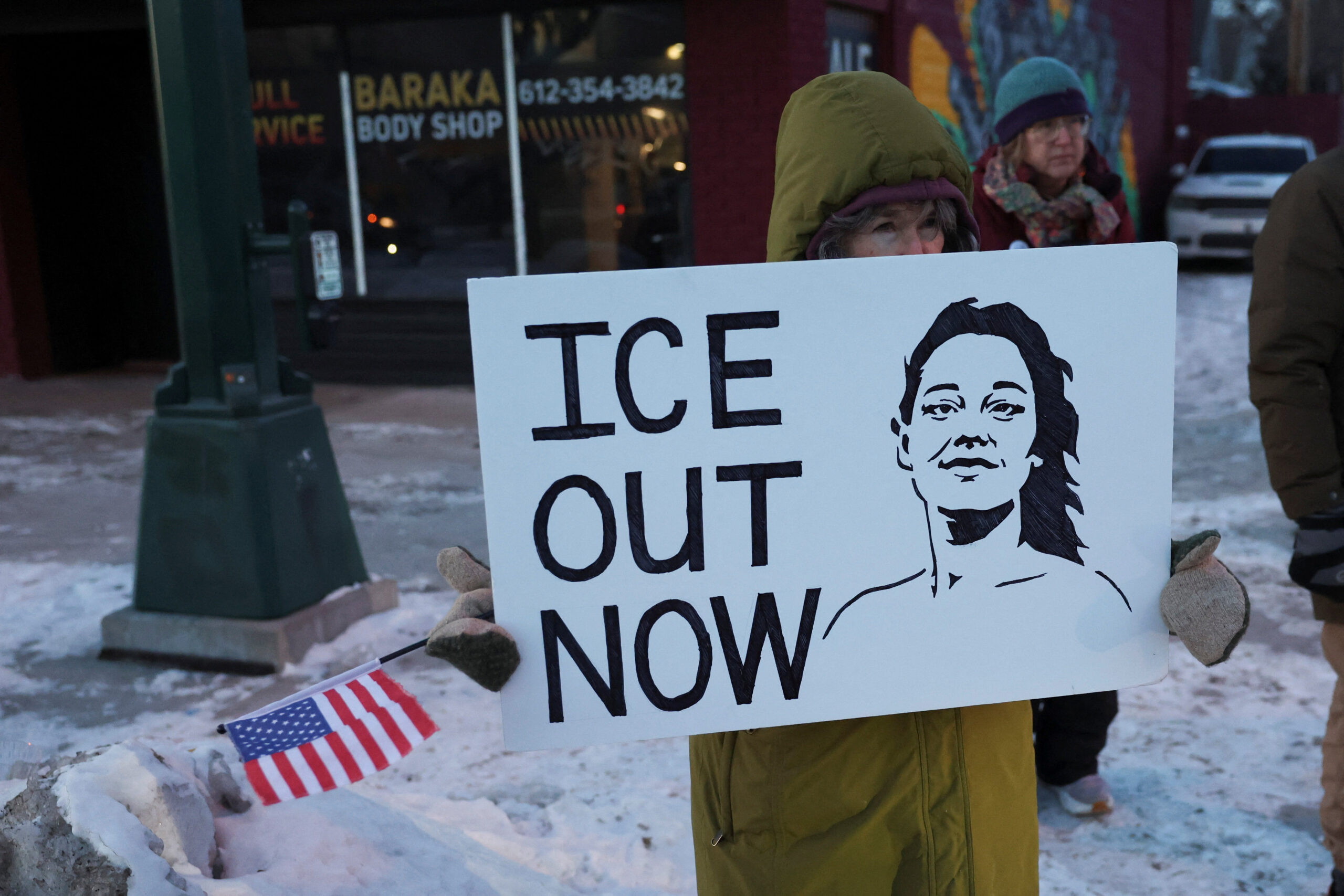
An investigative report examining organized efforts to monitor and interfere with federal immigration enforcement has renewed concerns about escalating rhetoric toward law enforcement and the risks it poses to public safety. Dan Proft discussed the issue with investigative reporter Christina Buttons, whose reporting focuses on activist networks operating in Minneapolis and other cities.
Buttons detailed the structure and operations of groups that describe themselves as “legal observers” or community watchdogs, but which she argues function as coordinated activist networks designed to impede Immigration and Customs Enforcement operations. According to her reporting, these groups are not spontaneous grassroots efforts but are instead organized, trained, and funded through national activist infrastructures with roots stretching back several years.
In Minneapolis, one such group, Defend the 612, presents itself as a decentralized community response to immigration enforcement. Buttons said her investigation found that the group conducts regular training sessions, coordinates activity through encrypted messaging platforms, and encourages participants to follow and confront ICE agents during operations. She joined these trainings shortly after the death of a woman involved in an ICE-related incident and said the sessions raised serious concerns about safety and accountability.
Buttons reported that participants were encouraged to minimize the risks of confronting law enforcement and to view non-compliance as a moral imperative. She said warnings about personal safety were largely absent, even in the wake of fatal incidents. Instead, organizers framed inaction as the greater danger, a message she believes may push participants toward increasingly risky behavior.
The reporting also described how some members openly discussed violent protests and celebrated injuries sustained by ideological opponents during demonstrations. While organizers themselves did not explicitly call for violence, Buttons said that discussions within private message groups revealed a tolerance for, and in some cases approval of, confrontational and unlawful conduct. Her attempt to advocate for nonviolent approaches within one such group reportedly resulted in her removal.
The interview also addressed the presence of barricades, citizen checkpoints, and efforts to obstruct journalists and law enforcement in certain neighborhoods. Buttons said these tactics mirror those used during previous periods of unrest in cities like Seattle and Portland and often involve activities that appear to violate state and federal law, including hiding individuals sought by authorities.
According to Buttons, these efforts are not isolated. She traced the origins of the ICE watch model to activist groups formed earlier in cities such as Chicago, where similar tactics were developed and later exported nationwide. Several of the organizations involved, she said, operate under the umbrella of large progressive funding networks, allowing them to scale operations while shielding donor identities.
While questions remain about the full scope of funding and any potential investigations, Buttons said the level of organization and coordination suggests these networks are becoming increasingly professionalized. She noted that some elected officials have adopted similar language around “observation” and “documentation” of ICE activity, further blurring the line between lawful oversight and active obstruction.
The reporting highlights a growing national debate over how far activist efforts can go before crossing into dangerous or illegal territory. As rhetoric surrounding immigration enforcement intensifies, critics warn that portraying federal agents as illegitimate or criminal risks encouraging confrontations that could have deadly consequences, not only for officers but for civilians drawn into these movements.