




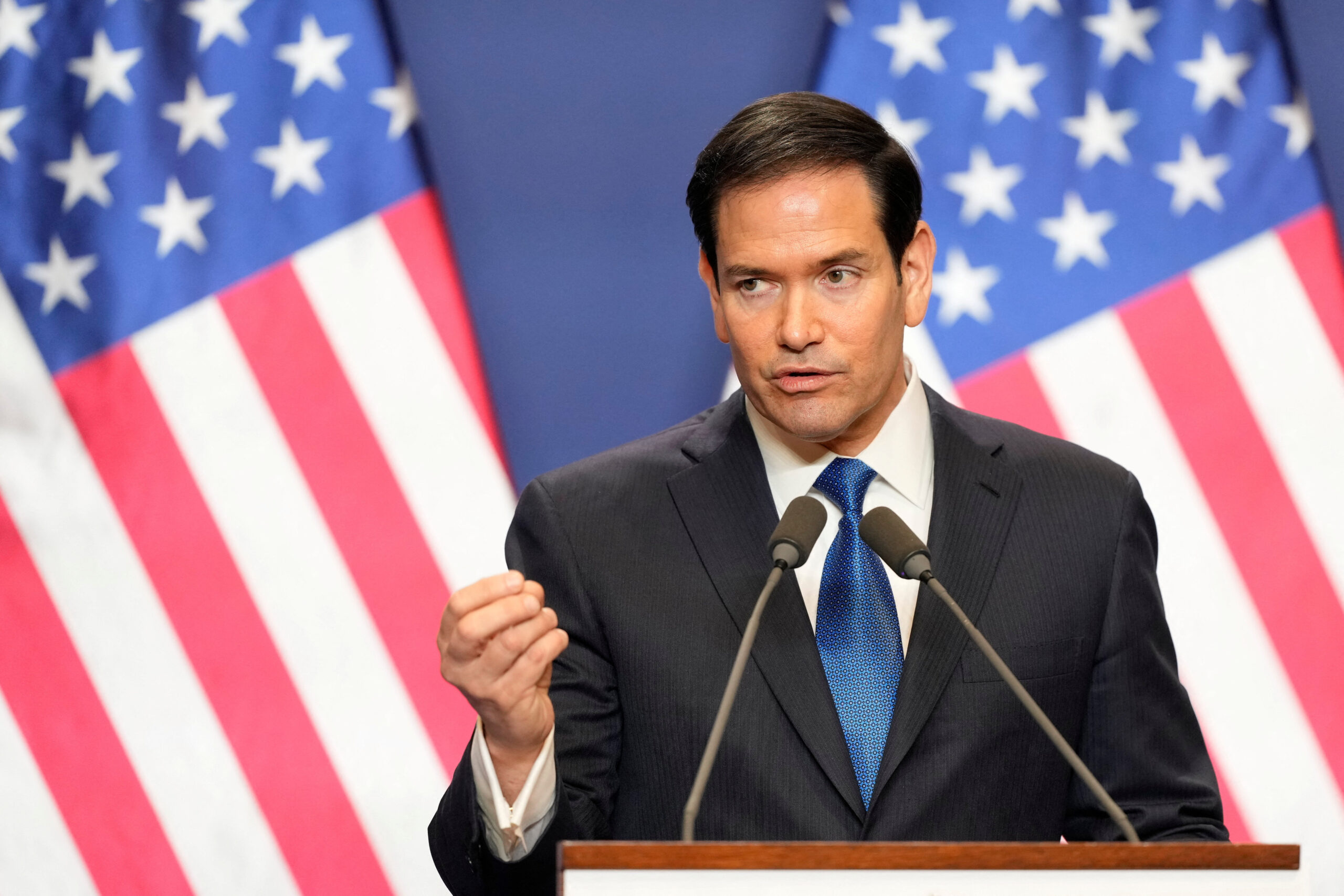
Comments made at the Munich Security Conference have sparked a renewed debate over culture, Marxism and the ideological direction of American politics, following an exchange involving Secretary of State Marco Rubio and Rep. Alexandria Ocasio-Cortez.
Rubio, speaking in Munich, emphasized what he described as the cultural and religious ties binding the United States and Europe. Referencing Gothic cathedrals, Dante, Shakespeare and even the Beatles, Rubio argued that the West is united not only by military alliances and economic cooperation but by a shared civilizational inheritance rooted in Christianity.
That framing drew criticism from Ocasio-Cortez, who dismissed appeals to shared culture as “thin” and argued that political and economic conditions, particularly class struggle, should be the primary focus. Her remarks prompted a pointed response from Bishop Robert Barron, who accused the congresswoman of echoing Marxist theory by reducing culture to a superficial byproduct of economic forces.
Barron argued that the dismissal of culture as ephemeral aligns with Karl Marx’s view that cultural institutions serve as a superstructure built upon material economic realities. He expressed concern that what he described as “unapologetic Marxism” is gaining traction among some Democratic leaders, warning that Marxist systems historically targeted religious institutions as obstacles to state power.
The exchange resonated beyond theological circles. Taki Theodoracopulos, a longtime columnist and co-founder of The American Conservative, said Barron’s critique reflected a broader unease about the ideological direction of younger political leaders.
Theodoracopulos suggested that many younger politicians and activists lack historical perspective on Marxism and its real-world consequences. He pointed to countries in Eastern Europe that experienced communist rule, arguing that voters there tend to show greater skepticism toward socialist policies because of lived experience under authoritarian systems.
In contrast, he said, younger Americans—many educated in universities where progressive economic theories are common—may be more receptive to rhetoric about class struggle and redistribution without fully understanding its historical context.
The debate also extended to immigration and national loyalty. Theodoracopulos referenced the oft-posed question, “Which side are you on?” as a fundamental issue of allegiance and assimilation. He cited historical examples of immigrants who expressed gratitude and loyalty to the United States after finding opportunity here, contrasting that with modern public figures who he believes show ambivalence toward American identity.
The broader concern, voiced by both Barron and Theodoracopulos, centers on whether cultural cohesion and shared civic identity remain strong enough to withstand ideological polarization. They argue that institutions such as the church and the family have historically served as stabilizing forces and warn that sustained attacks on those institutions could weaken democratic norms.
Supporters of Ocasio-Cortez, however, argue that her focus on material conditions reflects legitimate concerns about economic inequality and systemic barriers. They maintain that discussions of culture cannot be separated from debates about access to opportunity, wages and social mobility.
As the 2028 presidential race begins to take shape, rhetoric from both parties has intensified. Observers note that cultural issues, immigration and the definition of American identity are likely to remain central themes.
The Munich exchange underscored how philosophical disputes once confined to academic circles are now playing out on international stages. Whether those debates signal a deeper ideological shift or simply another chapter in America’s long-running culture wars remains to be seen.