




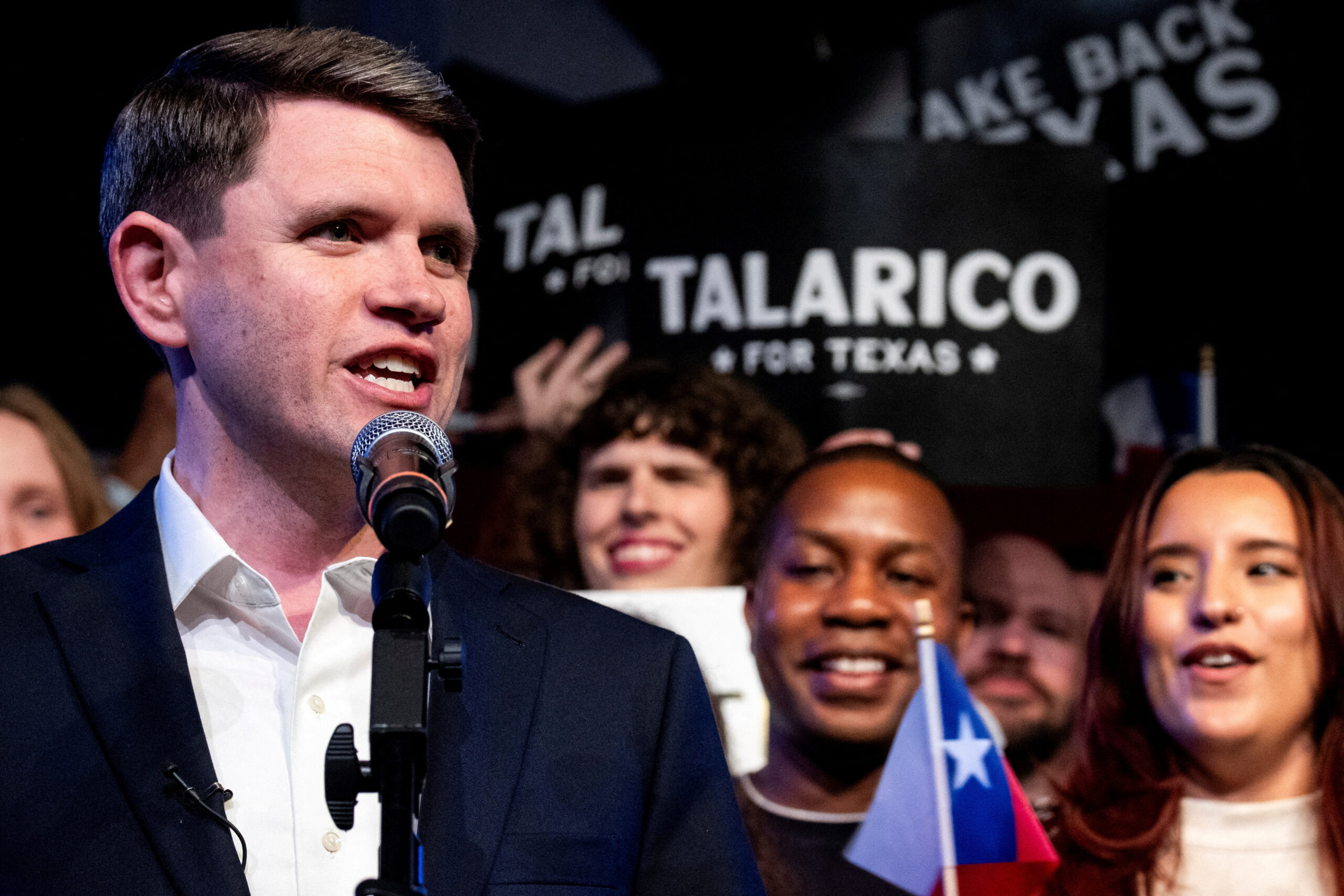
A series of high-profile primary results in Texas has revealed shifting political dynamics within both major parties, with voters sending mixed signals about leadership, electability, and the changing expectations placed on candidates in today’s political environment.
Among the most closely watched contests was the Democratic primary battle involving Rep. Jasmine Crockett, who lost her bid to advance after facing a challenge from state legislator James Talarico. The race drew national attention because of Crockett’s rising profile on cable news and social media, where her confrontational style had made her a prominent voice within progressive circles.
Political analyst David Drucker of The Dispatch said the result suggested Democratic voters may have been prioritizing broader appeal as they look ahead to competitive general elections.
“Talarico’s rhetoric is progressive, but stylistically he has more centrist vibes,” Drucker said. He noted that the candidate’s background studying for the ministry and his focus on faith-based messaging helped him connect with voters in a way that contrasted with Crockett’s more aggressive political style.
While Crockett often framed politics in terms of energizing new voters rather than persuading skeptics, Drucker said the results underscored the continuing importance of persuasion in electoral politics.
“There are no magic beans in politics,” he said. “You still have to persuade voters.”
On the Republican side, the race for the U.S. Senate nomination is headed to a runoff between incumbent Sen. John Cornyn and Texas Attorney General Ken Paxton, setting up a high-stakes contest that could shape the GOP’s chances in the general election.
Drucker said Cornyn’s narrow path to the runoff highlights vulnerability for the longtime senator, who is facing the first serious nomination challenge of his Senate career.
“For an incumbent to be pushed into a runoff like this is a problem,” he said, noting that Paxton’s strong showing reflects dissatisfaction among some Republican primary voters with establishment figures who have been in office for decades.
Runoffs in Texas often produce unpredictable outcomes because turnout is typically lower and dominated by more ideologically motivated voters. That dynamic could favor Paxton, who has built a loyal base among conservative activists despite years of legal and ethical controversies.
At the same time, Drucker said Cornyn’s relatively strong finish in the first round suggests that Republican donors and strategists who worry about Paxton’s electability in a general election may continue investing heavily in the incumbent’s campaign.
“There’s a real concern among Republicans that only one Republican could lose that Senate seat,” he said, referring to Paxton.
Cornyn’s challenge reflects broader changes in the Republican electorate over the past decade. According to Drucker, voters increasingly favor candidates who are highly visible on social media and cable news and who frame politics in combative terms.
Cornyn, by contrast, represents an older political model focused on legislative work and policy accomplishments rather than constant public messaging.
“That used to be what Republican voters wanted,” Drucker said. “But the party has changed.”
Elsewhere in Texas, several congressional races produced notable outcomes that also reflect voter dissatisfaction with incumbents.
Rep. Dan Crenshaw lost his primary to a conservative challenger backed by Sen. Ted Cruz, an upset that surprised many political observers. Drucker said the defeat may have been less about ideology and more about the perception that Crenshaw had become disconnected from his district.
Incumbents who fail to maintain close contact with voters can quickly become vulnerable, especially in districts that have recently been redrawn through redistricting.
“People want to see you in the district,” Drucker said. “They want to feel like you’re there for them.”
On the Democratic side, veteran Congressman Al Green also appeared headed for defeat, a result that Drucker suggested could reflect growing appetite among Democratic voters for new leadership and fresh political voices.
He compared the moment to the wave of insurgent candidates that reshaped the Republican Party during the Obama years and later helped fuel the rise of former President Donald Trump.
“These cycles happen,” he said. “Voters get hungry for new faces.”
Beyond the Texas races themselves, the results come as national political conditions appear to favor Democrats in the battle for control of the House of Representatives. Current polling averages show Democrats leading Republicans on the generic congressional ballot by several points.
Drucker said that advantage, combined with the GOP’s narrow House majority, puts Republicans in a difficult position heading into the next election cycle.
Even so, he believes Republicans still have a strong chance to maintain control of the Senate, where the political map currently favors the party despite competitive races in several states.
The broader political environment could still shift depending on developments in the economy and foreign policy. Republicans are hoping that economic improvements tied to the implementation of the administration’s major tax and spending legislation could boost voter confidence.
At the same time, the ongoing conflict with Iran adds an unpredictable factor to the political landscape.
Drucker cautioned that military success abroad does not always translate into political gains at home, particularly if a conflict drags on or produces unexpected setbacks.
“Nothing is guaranteed in war,” he said.
With the midterm election cycle still months away from reaching its most intense phase, political analysts say many key factors remain unresolved. Economic perceptions, foreign policy developments, and candidate quality in competitive districts will likely determine whether current trends hold or shift in the months ahead.
“The cake usually starts baking around June and is done by Labor Day,” Drucker said, suggesting that the political landscape could still change significantly before voters head to the polls.