




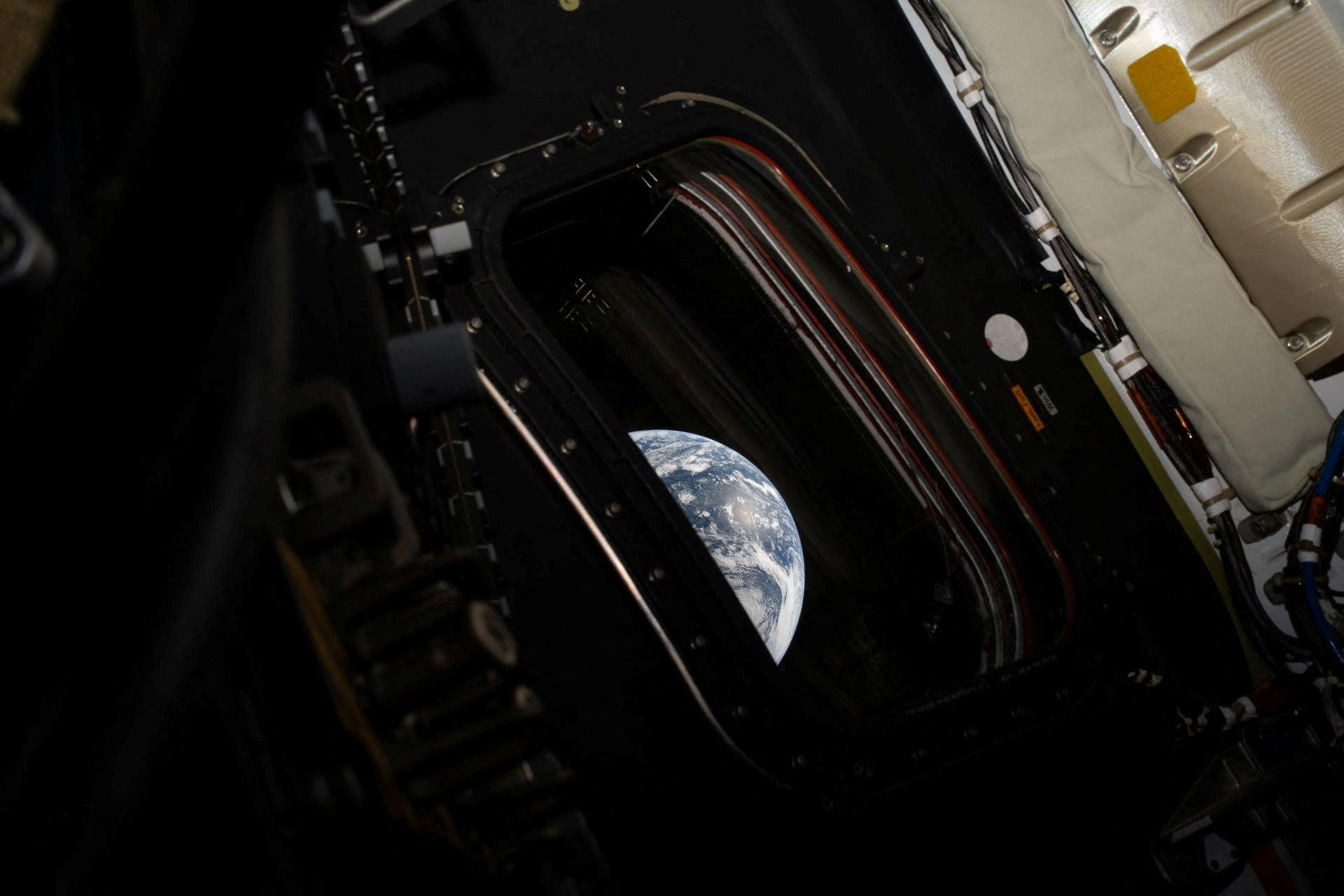
Veteran NASA astronaut Tom Jones, who completed four Space Shuttle missions and nearly nineteen hours of spacewalking while helping construct the International Space Station, joined Chicago’s Morning Answer hosts Amy Jacobson and Jim Yurio to discuss the Artemis 2 mission, which sent three American astronauts and one Canadian on a historic trajectory around the moon that will take them approximately four thousand miles beyond the lunar surface, surpassing the record set by the Apollo 13 crew in 1970.
Jones, author of Space Shuttle Stories: Firsthand Astronaut Accounts from All 135 Missions, said the mission represents the most significant step in human spaceflight since the final Apollo lunar mission in 1972, noting that the crew is venturing more than a thousand times farther from Earth than he traveled on any of his own shuttle missions. The Orion spacecraft carrying the crew will reach approximately 253,000 miles from Earth during its far-side lunar flyby before beginning the return trajectory for a Pacific Ocean splashdown off the California coast scheduled for Friday evening. He said the images the crew has been transmitting of Earth as a blue marble from lunar distance capture a perspective that inevitably moves anyone who experiences it, and that his own limited exposure to the view from low Earth orbit affected him profoundly.
Jim Iuorio disclosed that another astronaut, whom he declined to name, had contacted him before the broadcast to say he did not want to appear on the program because he believed NASA did not fully understand a heat shield problem identified on the Artemis 1 uncrewed mission and should not have flown a crew on Artemis 2. Jones said the heat shield issue has been studied carefully over the past two years in the process of certifying the spacecraft for crewed flight. Chunks of heat shield material did separate during the Artemis 1 re-entry, he acknowledged, but sufficient shielding remained to protect the vehicle, and engineers have since identified the mechanism and designed a modified re-entry trajectory for Artemis 2 that addresses the concern. He said he expects the crew to return safely and that a redesigned heat shield providing more trajectory flexibility will be implemented on subsequent Artemis missions.
On the question of why Artemis 2 is not landing on the moon despite the popular excitement surrounding the launch, Jones explained that the lander hardware is not yet ready and that the program is following a deliberate step-by-step test sequence. Artemis 3, planned for next year, will test the lander design in Earth orbit. Artemis 4, targeted for 2028, is the planned moon landing mission. He said a permanent lunar research outpost on the surface is expected to be established within the next ten years, with the first foundational elements in place by approximately 2030. The expertise and systems developed on the moon will then inform a human Mars mission projected for roughly twenty years from now.
Jones spoke warmly about pilot Victor Glover, who is among the crew members, noting that Glover is universally known in the astronaut office as Ike, a nickname standing for I Know Everything, and that he is as capable and prepared as any astronaut Jones has encountered. He said Glover’s public remarks about hoping that future generations will experience spaceflight simply as human history rather than Black history or women’s history reflected a maturity and perspective that resonated with Jones, who said the last thing on his mind when evaluating a colleague’s qualifications is the color of their skin.
The conversation included a discussion of the mission’s toilet system, which experienced some initial glitches that required troubleshooting before being resolved. Jones noted that waste management is a genuinely critical life support function in a spacecraft the interior size of a small minivan, that the Orion system is derived from proven International Space Station design, and that the teething problems were overcome through standard troubleshooting without lasting impact on crew comfort or mission objectives. He assured listeners the system is performing its intended functions and that the debrief after the mission will capture any lessons for future hardware refinement.
On the broader significance of the Artemis program, Jones said the mission is designed to establish American technical leadership in space exploration through the twenty-first century, develop the capability to harvest resources from the lunar surface that could support long-duration human presence off-planet, and build the knowledge base required to eventually search for life on Mars. He said the program represents the next phase of human exploration after the research-focused International Space Station era, with an emphasis on genuine frontier expansion rather than Earth-orbit science operations.