




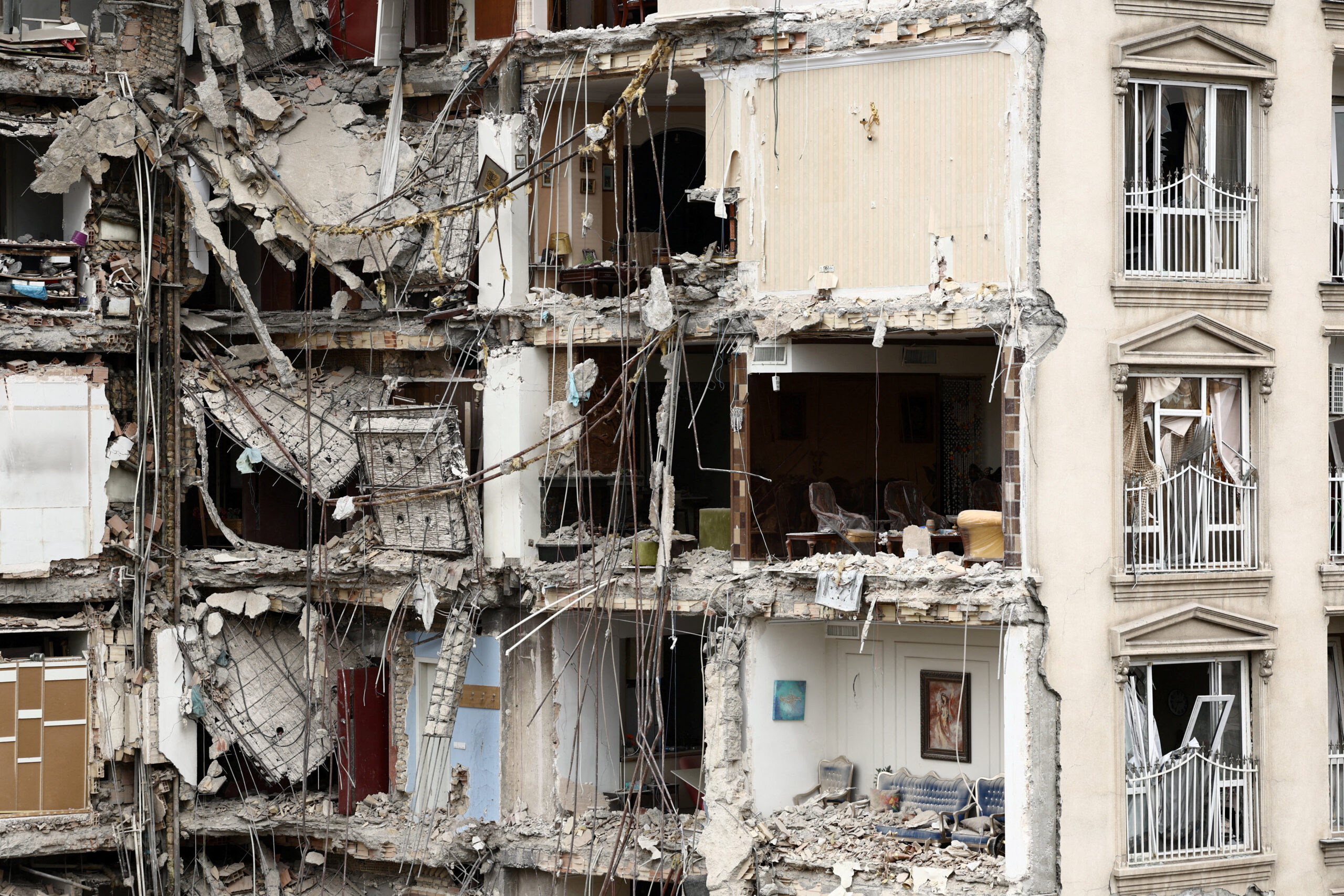
President Trump addressed reporters on the tarmac before departing for Memphis and a visit to Graceland Monday, offering his most detailed public account yet of where negotiations with Iran stand and what a deal would require. With a five-day clock now running on Iran to come to terms, Trump said he is in contact with individuals he described as reasonable and respected figures who appear to be running the country in the absence of any visible supreme leader, and that he believes the conversations are substantive enough that whoever he is speaking with may represent a genuine change in Iranian leadership. He declined to identify his interlocutors for fear of their safety.
The outlines of what Trump said he wants from a deal are a complete halt to Iran’s nuclear weapons program, the physical surrender of Iran’s existing stockpile of enriched uranium, a reduction in Iranian missile capacity, and the reopening of the Strait of Hormuz to international maritime traffic. On the question of who would control the strait going forward, Trump suggested some form of joint arrangement, at one point floating himself as a potential party to that agreement. He also acknowledged that the successive elimination of Iranian leadership figures across what he described as phases of the campaign has effectively produced regime change as a practical matter regardless of what any negotiated settlement says.
Taki Theodoracopulos, the longtime Spectator columnist, co-founder of The American Conservative, and author of the new book “The Last Alpha Male,” joined Dan Proft on Chicago’s Morning Answer to offer a dissenting and distinctly literary frame for the conflict. Drawing on Shakespeare, he cast Israeli Prime Minister Benjamin Netanyahu in the role of Iago to Trump’s Othello, arguing that Israel has been the primary driver pushing the United States into a war it might not otherwise have entered, with Trump’s inner circle on Middle East policy dominated by figures he described as real estate operators rather than seasoned diplomats of the caliber of James Baker or Dean Acheson.
Taki said he voted for Trump without expecting to be voting for Netanyahu’s foreign policy agenda, and that whatever one thinks of the Iranian regime, a country with twenty-five hundred years of history is unlikely to simply surrender on demand. He reserved particular criticism for the settler movement in the West Bank, which he said is acting in ways that appall many Israelis themselves and that damage Israel’s international standing by associating the country with its most extreme elements.
Despite those reservations, Taki allowed that the current moment may represent a genuine opportunity to reshape the Middle East in ways that have not been available at any previous point in the forty-seven years of the Islamic Republic’s existence. He cited the Abraham Accords, the degradation of Hezbollah and Hamas following October 7th, the neutralization of the Houthis, and the broader realignment of Gulf state interests as factors that have transformed the regional landscape. His central criticism of the Iranian regime, he said, is not that it opposed Israel but that it did so in a self-defeating way, arming and financing proxy forces across the region in a manner that has cost it Syria, Lebanon, and now the goodwill of Gulf states it should have been courting. He pointed to data showing that of more than six thousand Iranian missile strikes launched during the current conflict, roughly eighty-seven percent have hit Arab countries rather than Israel, further alienating the very neighbors Iran needed as partners.
Taki closed by expressing genuine sympathy for Palestinian civilians, particularly those living in refugee camps he said he has visited and written about for decades, while making clear that sympathy for the displaced does not translate into support for the leadership that has instrumentalized their suffering. On whether Trump can ultimately pull a workable agreement out of what he called a madhouse, Taki said he genuinely does not know, but that the conditions today are more favorable than they have ever been, and that the Iranian regime’s consistent habit of acting against its own strategic interests may finally be catching up with it.