




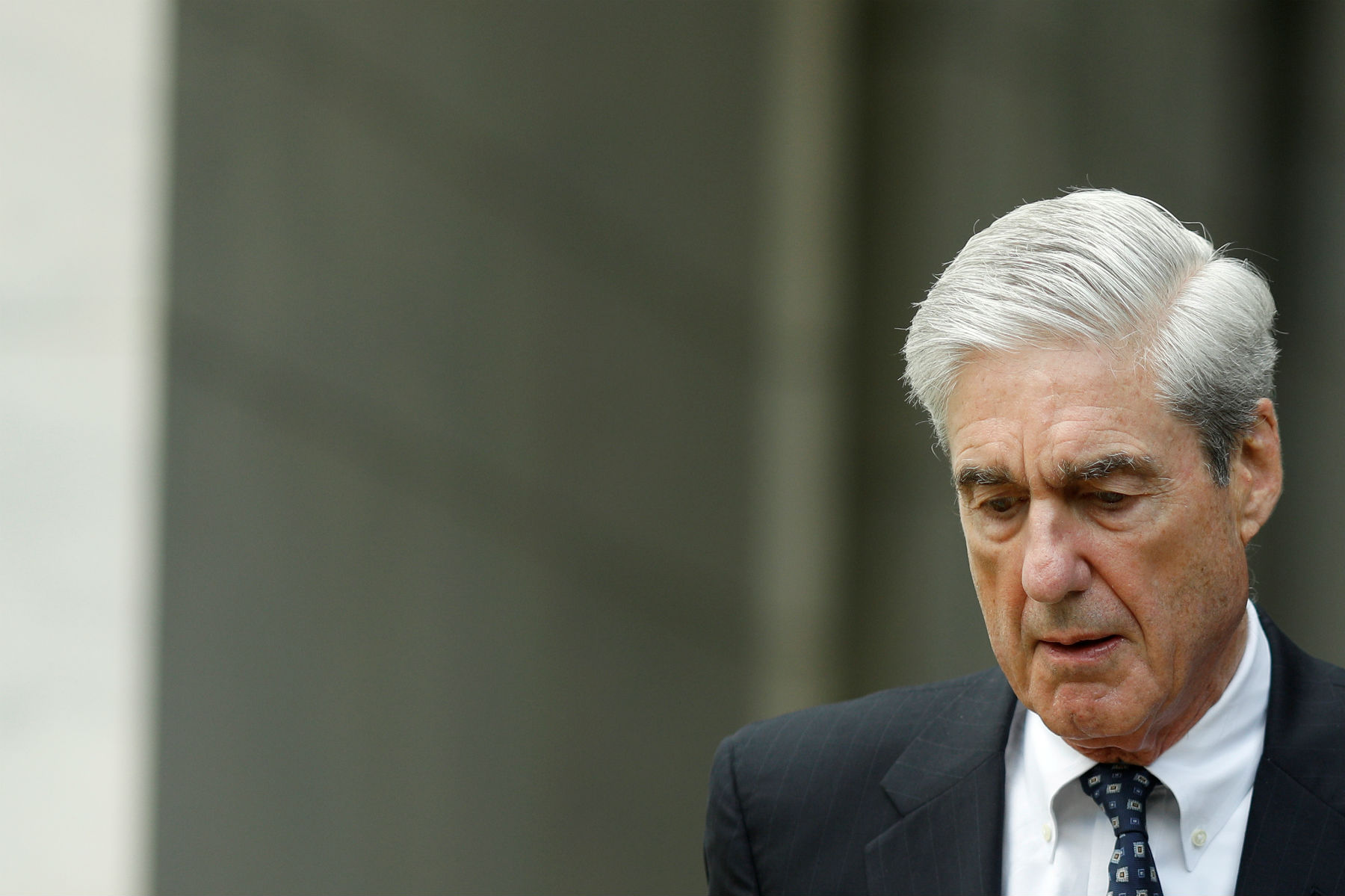
The death of former FBI Director and Special Counsel Robert Mueller drew sharp reactions over the weekend, with President Trump posting on Truth Social that he was glad Mueller was dead and could no longer hurt innocent people. Retired FBI Special Agent Thomas Baker, author of “The Fall of the FBI: How a Once Great Agency Became a Threat to Democracy,” joined Dan Proft on Chicago’s Morning Answer to assess Mueller’s complicated legacy and the broader institutional decay he argues Mueller helped set in motion.
Baker said Trump’s post reflects the depth of anger the president carries over what he views as a profound injustice, an emotion Baker said is actually legible in the pages of Mueller’s own second volume report, which he described as echoing with the frustration of an innocent man flailing at his accusers. The special counsel investigation never established that Trump was involved in Russian election interference or had unlawful relationships with any Russian official, a point underscored in a 2019 congressional hearing in which Mueller confirmed both findings on the record. Baker nonetheless suggested Trump would have been better served by either saying nothing or, at most, something in the passively withering Churchillian tradition rather than an outright expression of satisfaction at a man’s death.
On Mueller’s tenure at the FBI itself, Baker traced the roots of the agency’s current troubles back to a single consequential moment in September 2001. Mueller had been FBI director for just five days when the September 11 attacks occurred. Three and a half days later, he appeared at Camp David before President George W. Bush with a detailed report identifying all nineteen hijackers, their financing, travel documents, and connections back to Al Qaeda. Before Mueller could finish presenting it, Bush cut him off and told him he didn’t care about that — he wanted to know how Mueller was going to prevent the next attack. Baker said Mueller, a proud man who believed he was presenting excellent work, was stung by the rebuke and resolved in response to fundamentally reorient the FBI away from its law enforcement identity and toward what he called an intelligence-driven agency. That cultural shift, Baker argued, laid the groundwork for everything that followed under James Comey.
Baker connected that transformation to the FBI’s subsequent failures to detect and prevent domestic terrorist attacks, particularly cases involving individuals already known to the bureau. Under Comey, he said, the emphasis on diversity, equity, and inclusion brought with it a reluctance to focus investigative attention on Islamist radicalization, with the bureau eventually removing the word Islam from the relevant investigative category entirely, replacing it with the generic term radicalism. Under Christopher Wray, Baker said, the pendulum swung further still, with white supremacy designated as the preeminent domestic threat despite, in his assessment, a near-total absence of factual cases to support that framing. He also noted the FBI’s entanglement with CAIR, a group he described as rooted in the Muslim Brotherhood, as emblematic of how political alignment distorted the agency’s judgment during that period.
Proft raised the case of Secret Service agent Maye Perez, whom reporting by Susan Crabtree at RealClearPolitics identified as the agent faulted for failing to place any assets atop the now-infamous sloped roof in Butler, Pennsylvania, from which a gunman shot at Trump and killed Corey Comperatore in July 2024. Perez has since been suspended a third time, currently under investigation for allegedly marrying a foreign national and failing to report it for nine months. Baker agreed that the persistence of what he called politicized DEI culture in these agencies represents one of the most stubborn obstacles facing the current administration, even with sympathetic leadership now in place.
Baker reserved his sharpest frustration, shared by Proft, for the absence of any comprehensive public accounting of the Butler failures nearly two years on. He outlined well-established best practices that were simply not followed that day, including unified command structures that integrate federal, state, and local law enforcement at a single venue, and common radio channels allowing cross-agency communication — capabilities the FBI had built out across rural America as far back as thirty years ago. Neither was present in Butler. Baker said that while he has some sympathy for the current FBI and Secret Service leadership given the scale of institutional problems they inherited, the American public deserves a clear, unified presentation of exactly what went wrong that day, what has been determined since, and what specific corrective steps have been taken. That accounting, he said, has not come.